
THE TOWER OF BABEL STELE: A GIFT TO THE WORLD PLACED IN THE CARE OF THE PEOPLE OF IRAQ
The now famous Tower of Babel Stele, which is the only contemporaneous illustration of the Tower of Babel while it was being constructed, has been in the safe stewardship of the Schøyen Collection for 25 years. During that time, the stele has been made available to scholars the world over, and thoroughly studied, exhibited and published.
After the stele’s creation by artists under the Babylonian king Nebuchadnezzar II (604-562 BC), and subsequent loss to humanity buried next to the Tower itself in the Iraqi sands for 2500 years, the time has come to make a decision about the future home of the stele for the next 2500 years.
Dr Martin Schøyen said: “The Tower of Babel stele is too important and unique to the history, culture and heritage of both Iraq and the world to be kept in the respected Schøyen Collection in remote Norway. It belongs, to be preserved for the future, in the Iraq Museum, to be prominently exhibited there for all Iraqi and other visitors to see and study.”
After talks with the Iraqi State Board of Antiquities and Heritage, Dr Martin Schøyen has presented this priceless artefact as a gift without conditions to the Iraqi people. In a handing over ceremony on 14 December 2023, both parts of the 47 centimetre high black stone slab were handed over to the Republic of Iraq’s representatives in Oslo.
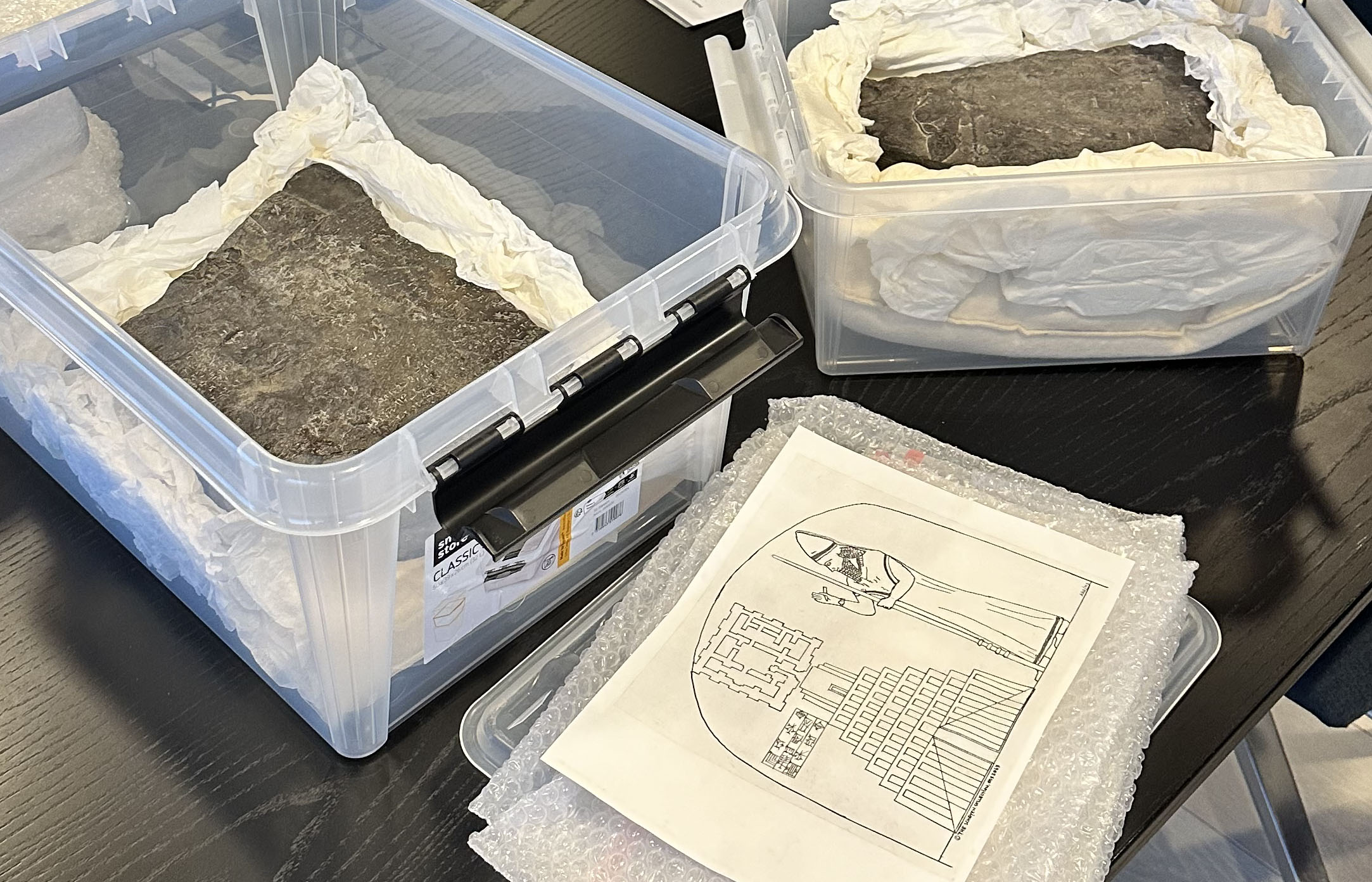
Commenting on the translations of the cuneiform text on the stele, Dr Schøyen wrote: “The restoration and reconstruction of two mighty ziggurats simultaneously was a huge enterprise that took some 43 years and the baking of over 17 million bricks for the Babylon tower alone, requiring tens of thousands of workmen, as well as the best architects, engineers, carpenters, masonry specialists and a host of other skilled and unskilled workers to accomplish. Coming from all the world then known, they spoke the different languages of the ancient world, and could not all communicate with each other as there were no extensive Lingua Franca at the time…. In short, there was confusion right at the outset - without the divine intervention of the Babylonian gods or Yahweh.”
Until scholarly study of the Tower of Babel Stele, knowledge of the Tower of Babel had been based on the account in Genesis 11:1-9, and on accounts in Herodotus. The Tower of Babel Stele provides an illustration contemporary with Nebuchadnezzar II's restoration and enlargement of the Tower of Babel, and with a caption that makes a definitive identification of these events. The stele includes building plans of the temple on the top, as well as a short account of the reconstruction process. Importantly, the text also mentions the separate restoration of the E-ur-imin-anki ziggurat in Borsippa, once believed by some scholars to be the Tower of Babel.
Until the 20th century, the ‘Babylonian Exile’ under Nebuchadnezzar II and other similar deportations, known most notably from Biblical references, had not been substantiated in historical records. Dr Schøyen said: “I am gratified that the Schøyen Collection has been able to contribute to an improved understanding of the Biblical tradition as well as to a greater understanding of the history of the Jewish people.”
There is more about the Tower of Babel stele on this website. Details of the cuneiform texts on the Tower of Babel stele can be found in Cuneiform Royal Inscriptions and Related Texs in the Schøyen Collection, by A. R. George with contributions by M. Civil, G. Frame, P. Steinkeller, F. Vallat, K. Volk, M. Weeden and C. Wilcke: Manuscripts in The Schøyen Collection Cuneiform Texts VI. Cornell University Studies in Assyriology and Sumerology (CUSAS) 17, Bethesda, MD: CDL Press, 2011.