<< collection 12 | top of current | 14 >>

<< previous page | next page >>

13. SCRIBAL ACTIVITY, SCHOOL & LEARNING (2)

13.4 SCRIBAL TOOLS: WRITING STYLI, INKWELLS, WAX TABLETS

MS 1987/09 Egypt, ca. 1580-1200 BC
MS 1987/10 Egypt, 1580-1085 BC
See also MS 3021/1, Babylonia, 800-600 BC
See also MS 1655/2, Khirbet Qumran, pre-68 AD
See also MS 1835, London, early 2c
MS 608 Egypt, ca. 600
MS 1987/12, Norway, 9th-10th c.

13. Scribal Activity, School & Learning

This collection covers all aspects of scribal activity, job descriptions, signed colophons, scribal illustrations, and equipment such as reeds, styli, inkwells and wax tablets.

It also includes a series of ancient school texts, taking the student through all stages from learning writing and grammar, to exercises in literature and advanced mathematics.

13.4 Scriba Tools: Writing Styli, Inwells, Wax Tablets

MS 1987/09 MS 1987
SCRIBE'S INKSTAND AND PEN-CASE WITH HIS INSCRIPTIONS

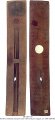
MS in Egyptian on wood, Egypt, 18th-19th dynasty, ca. 1550-1185 BC, 1 wooden inkstand and pen-case, 34,0x6,0x0,7 cm, up to 27 lines in Hieratic book script on each side, 2 circular holes for black and red ink at top, a slot cut as to leave a bridge across it to hold 2 pens, 1 pen present.


Context: 2 similar inkstands and pen-cases in British Museum, BM 5518 and 12786, the latter dated to Tutmosis III (1479-1425 BC).

Provenance: 1. Scribe, Egypt (ca. 1550-1185 BC -); 2. Private collection, Netherlands, no 331 (1959-1998); 3. Charles Ede, London.

back to top top
MS 1987/10  

SCRIBE'S INKSTAND


Inkstand, green glazed steatite, Egypt, New Kingdom, ca. 1550-1069 BC, 1 inkstand, 6,0x3,5x1,8 cm, 2 holes for black and red ink, decoration of parallel lines at either end.

Provenance: 1. Scribe, Egypt (ca. 1550-1069 BC); 2. Private collection, Netherlands (1959-1998); 3. Charles Ede, London

See also MS 3021/1, Cylinder seal illustrating wedge for writing on clay and styli for writing on wax, Babylonia, 800-600 BC

See also MS 1655/2, Inkwell, Khirbet Qumran, before 68 AD

See also MS 1835, Wax tablet, London, early 2nd c.

MS 1987/10
back to top top
MS 608
  1. ACKNOWLEDGEMENT OF A LOAN FROM VICTOR SON OF PHOIBAMMON TO A FARMER SON OF ALPHUAS, BOTH FROM THE ESTATE TAL- IN OXYRHYNCHUS
  2. MULTIPLICATION TABLE
  3. UNIDENTIFIED TEXT
MS 608


MS in Greek on wax, Cheikh Fadl, Egypt, ca. 600, 1 wooden wax tablet, 21x11 cm, (18x8 cm), 9+4(?)+3 lines in Greek cursive script, with the original writing stylus of bronze.

Binding: England, before 1988, wooden box.

Context: The tablet has originally been part of a codex of tablets. It is pierced with 4 holes for strings to be bound in concertina-folded format.

Provenance: 1. Moen Collection, Baarn, Holland, inv.HT4, (1970s-1980); 2. Charles Ede Cat. "Writing & Lettering in Antiquity", 12(1988):30; 3. Sam Fogg Rare Books Ltd., London, March 1990.

Commentary: Text 1 published by P.J. Sijpesteijn in Stud. Pap. 21. Text 2 published by H. Harrauer & P.J. Sijpesteijn: Neue Texte aus dem antiken Unterricht, in Mitt. Pap. Ost. Nat. NS XV (1985).

back to top top
MS 1987/12 MS 1987/12
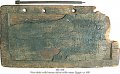
VIKING STYLUS WITH CIRCULAR ERASER FOR WAX TABLETS

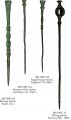
Stylus in bronze, Norway, 9th-10th c., 1 stylus, 18 cm, bulbous finial diam. 1,5 cm formed by 4 curved bands leaving 4 openings in between, round flattened eraser on top.
Provenance: Provenance: 1. Found near Borre, Vestfold (1897); 2. Family estate, Tønsberg, Norway (-1999); 3. Hans Storesund, Oslo, Feb. 2000.

Commentary: Registered at Oldsaksamlingen, Historisk Museum, Oslo.

back to top top

>> PAPYRI & OSTRACA