<< collection 22 | top of current | 24 >>

<< previous page | next page >>

23: EXTINCT RELIGIONS (2)

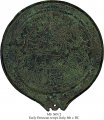
23.6 MITHRAISM & ROMAN

MS 247 Egypt, late 1st c. BC
MS 5283 Italy, 1771
See also MS 1720, Curse: To the god Mercury Arverius. England, ca. 150-300

23.7 GERMANIC & NORSE

MS 1708 England, ca. 1000
MS 5302 Iceland, 1925
See also MS 2128, Norway, 1711-1712 See also MS 4517, Italy, 3rd quarter 15th c.

23.8 MAYAN

MS 1280 Honduras, ca. 600-850
See also MS 693, Guatemala, ca. 900
Other Native American religions, see Collection 4.8

23. Religions

EXTINCT RELIGIONS (2)

23.6. Mythraism & Roman Religion

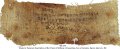
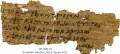
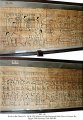
MS 247 ms247
MUMMY FUNERARY INSCRIPTION OF THE PRIEST OF MITHRAS, ORNOUPHIOS, SON OF ARTEMIS, LIVED 14 YEARS, CHOIAK 15, THE 3RD YEAR
MS in Greek on linen cloth, Egypt, late 1st c. BC, 1 cloth (complete), 14x39 cm, single column, (9x21 cm), 6 lines in Greek half-uncial. Provenance: 1. H.P. Kraus, New York.

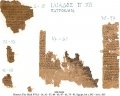
Context: The collection of the renowned papyrologist Prof. Atiyah consisted of more than 677 papyri, mainly originating in Middle Egypt, including Oxyrhynchus and Fayum. The first part of 140 papyri (H.P. Kraus cat. 105(1961)), is now in Yale, Beinecke Library, while 242 Greek papyri is MS 244 and 295 Coptic papyri is MS 245 in The Schøyen Collection, see also MS 108.

Provenance: 1. Aziz Suryal Atiyah, Utah, USA ( - ca. 1960); 2. H. P. Kraus, New York, USA, (ca. 1960 - ); 3. Richard Linenthal Collection, London.

Commentary: Apart from this MS, no documents or scriptures seem to be extant on Mithra. Scholars have been able to analyze the cult based on fragmentary references, short stone inscriptions, bas-reliefs and sculptures. Mithra was an ancient Indo-Aryan god of the Persians and Indians, identified with the sun, cattle, agriculture, war, truth and immortality. Introduced into the Roman Empire in the 1st c. BC, Mithraism became the most popular and widespread of the foreign religions adopted by the Romans. It lasted until Christianity was adopted by Constantine the Great in 311.

back to top top
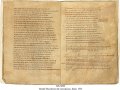
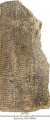
MS 5283 ms5283a
  1. VERGIL: BUCOLICON
  2. VERGIL: GEORGICON
  3. GIUSEPPE DELLA SANTA: INTRODUCTION AND VERSE IN PRAISE OF LEOPOLD I GRAND DUKE OF TOSCANA
MS in Latin on vellum, Firenze, 1771, 59 ff., 22x15 cm, single column, (17x12 cm), 29 lines in rustic capitals and Italic script (text 1) by Giuseppe della Santa, as facsimile of Codex Mediceus of 5th c., dedication copy to Leopold I Grand duke of Toscana.
  ms5283b

Binding: Firenze, late 19th c., paper wrappers in 4 volumes, stitched. Cloth fall-down-back box, gilt-lettered red morocco spine strip.

Context: The whereabouts of the Aenid which originally followed this MS, is unknown. For other mss of Georgics see MS 61 of 11th c. and MS 1395 of 12th c.

Provenance: 1. Biblioteca Medicea Laurenziana, Firenze (1771); 3. Grand duke Leopold I, Toscana (1771-); 3. Bernard Breslauer, New York (-2005); 4. Christie's New York 27.6.2005: 1170.

Commentary: Vergil's (70-19 BC) works survive in hundreds of MSS, headed by the 3 famous codices, Codex Mediceus, Laur. 39.1 of the 5th c., Codex Platinus, Vatican Pal.lat. 1631, written ca. 500, and Codex Romanus, Vatican lat.3867 also written ca. 500. All three written in rustic capitals. Bucolicon (Latin Bucolica or Eclogae) are ten unconnected pastoral poems written in imitation of Theocritus. Georgicon or Georgica (husbandry) is written in hexameter in imitation of Hesiod's Works and Days (see MSS 593 and 5068), but is far more than a practical guide to farming. It ends with the episode of Aristaeus together with the story of Orpheus and Eurydice. Aristaeus, son of Apollo and the nymph Cyrene, was a god of various kinds of husbandry including bee-keeping and hunting. Orpheus, a pre-Homeric poet, son of a Muse, married the nymph Eurydice, who died while being pursued by Aristaeus. Orpheus went down to the Underworld to recover her from Persephone or Proserpina, daughter of Zeus and Demeter, snatched away to be queen of the Underworld by Hades, but Orpheus failed. The famous story is also told by Ovid and Claudian, and was given a more hopeful ending in Gluck's opera. For another, and the oldest account of a descent to the Underworld, see MS 3281 from about 1800 BC.

Giuseppe della Santa, scribe of Biblioteca Medicea Laurenziana. Duke Leopold I of Toscana (1747-1792), Grand duke of Toscana (1765-1790), Holy Roman Emperor, and King of Bohemia and Hungary, Leopold II (1790-92).

See also MS 1720/1, Curse: To the god Mercury Arverius. England, ca. 150-300

back to top top  

23.7. Germanic & Norse Religion

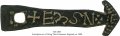
MS 1708 ms1708
EMSN, INSCRIPTION ON A VIKING THOR'S HAMMER
MS in Latin on vellum, Firenze, 1771, 59 ff., 22x15 cm, single column, (17x12 cm), 29 lines in rustic capitals and Italic script (text 1) by Giuseppe della Santa, as facsimile of Codex Mediceus of 5th c., dedication copy to Leopold I Grand duke of Toscana.

Provenance: 1. Excavated in Yorkshire, England; 2. Neil Clayton, Lavenham, Suffolk (- 1993); 3. Jeremy Griffiths, Oxford.

Commentary: Around 50 examples of Thor's Hammer are found widely distributed throughout Scandinavia from 9th to 11th c., with a few examples from England. As amulet it symbolises the god's protection of the wearer. The 2 crosses suggest a Christian owner, and makes it an unusual and interesting example of the birth of Christianity among the Vikings, still clinging to the old heathen god Thor. Thor (Anglo-Saxon Thunor and German Donar) was the son of Odin the Allfather. He was the god of order and chief antagonist of the giants, the demons of chaos. His chief weapon was his shorthandled hammer. His main enemy was the serpent, Jörmundgand, symbol of evil, who surrounded the world. Thor was sometimes equated with Jupiter. Jove's Day became Thor's Day (Thursday). He causes the thunderstorms whenever he uses his hammer or rides his chariot across the heavens.

See also MS 1697, Runic incantation formula. Denmark, ca. 1000

back to top top
MS 5302 ms5302
HÁVAMÁL, COMMENTARY BY PÁLMI JÓSEFSSON AFTER SIGURDAR NORDAL

MS in Icelandic on paper, Iceland, 1925, 24 ff. (-3), 17x10 cm, single column, (15x10 cm), 18 lines in cursive script by Pálmi Jósefsson.

Binding: Iceland, 1925, yellow paper covers, stapled, by Bókaverzlun Gudm. Gamalíelssonar, titled Stílabok on front cover, tables on the back.

Provenance: 1. Pálmi Jósefsson, Iceland (1925-); 2. Antikvariat Bragi Kristjónsson, Reykjavik, Bóksöluskrá nr. 94 (Dec. 2005):85.

Provenance: 1. Pálmi Jósefsson, Iceland (1925-); 2. Antikvariat Bragi Kristjónsson, Reykjavik, Bóksöluskrá nr. 94 (Dec. 2005):85.

Commentary: Håvamål (words of the one on high), the words of Odin (Woden/Wotan) the father of gods. It includes the account of his theft of the precious poetry, called the sacred mead which he brought to the gods. It also includes the account how Odin acquired wisdom by hanging nine nights on the World Tree and by sacrificing one of his eyes. He was pierced by a spear, he was a sacrifice to himself, being nearly dead he received the wisdom that belongs only to the dead, as well as the ability to write runes. Odin was the god of the dead and of war. Those who fell in battle came to Valhalla, and would live in bliss there until Ragnarok (Judgement day, Götterdämmerung) when they would join Odin in his final fight against Fenrisulven, a monstrous wolf.

See also MS 2128, Snorre Sturlason: Sagas of the Norse Kings. Norway, 1711-1720

See also MS 4517, Caius Julius Caesar: Commentarii de bello gallico. Italy, 3rd quarter 15th c. References to German religion compared to Gallic

back to top top

23.8. Maya Religion

MS 1280 ms1280
PROGRAMMATIC STATEMENT OF MAYA RITUAL AND KINGSHIP, POINTING TO THE USE OF RITUAL LIBATION UNDER DIVINE SANCTION, AND PORTRAYING RITES OF PASSAGE FROM SEMI-DIVINE RULER TO DIVINE GOD, WITH COLOPHON: "IT IS WRITTEN, WITH THE SANCTION OF THE GODS, PATRONS OF THE SCRIBES, BY THE SCRIBE, (HIS NAME), ON HIS BOWL, LORD'S NAME (OWNER), FOR THE HOLDING AND DRINKING OF CACAW"
MS in Mayan on clay, North Eastern Honduras, ca. 600-850, 1 cylindrical vase (complete), 20x18 cm, with 1 horizontal and 4 vertical bands of 32 Mayan late Classic hieroglyphs, in a bold clear script in brown paint on a light brown-orange ground, 1 jaguar masked figure, and 3 attendants in full ceremonial costumes painted in red and black.

Context: Another Maya vase with a similar dancer, see www.mayavase.com, # 774. A Mayan Codex vase of ca. 900, see MS 693.

Provenance: 1. Unidentified temple, North Eastern Honduras; 2. Bruce Ferrini, Akron, Ohio.

Commentary: The main figure, a "comic dancer", in net suit with jaguar headdress, is being accompanied by musicians. The attendant with black-painted face is scattering droplets of blood from his left hand. The second attendant holds two rattles. The third attendant is playing a rasca, a segmented musical instrument that is scraped with a shell to make a rhythmic sound. Cf. Justin Kerr: "The Popol Vuh as an instrument of power".

Published: Justin Kerr: The Maya Vase Book, Vol. 4, p. 600.

See also MS 693, Burial text, Guatemala, ca. 900

Other American Indians' religions, see Collection 4.8

back to top top

>> LIVING RELIGIONS