23. Extinct and living religions
Click on the pictures to view them in full screen format
Foreword by Dr. Gunnar Stålsett, Bishop emeritus/President of Religions for Peace:
The Schøyen Collection is a unique gift to everyone fascinated by the mystery that lies at the origins of religions and cultures. As far as is known, this is the only public or private collection, library, or museum world-wide, that actually has made an attempt to form a collection of the various living and extinct religions of the world, and over a period of time nearly as far back as religion itself. This treasure offers us a bridge between the ancient past and the distant future. As it widens our knowledge of ancient cultures, societies and individual life, it enhances our understanding of contemporary expressions of faiths.
At a time when the significance of spirituality and values is beginning to fill a long suffered void in many secularized societies, the awareness of the pluralism of religious roots and traditions is becoming more important. Globalization implies that people of different faiths are learning to coexist outside their previously geographically defined area. Religion is not any longer the lost dimension of statecraft.
Religion represents the long line of memories in the history of nations, sometimes exploited for political aims. To entangle cultural, ethnic and national traditions from genuine religion is a constant challenge in the global work for peace, human dignity and reconciliation. The Schøyen Collection helps us to recognize the significance of our roots as religious communities and individuals and to be humbly aware of the sources from which our faith has sprung.
The human dimension of all religious traditions and their interaction with historic forces of change does not minimize the significance of the mystery of religious experience. It rather fills us with awe and humility to get a glimpse into the thoughts and revelations that constitutes the ever changing cosmos of living faiths. It affirms in a powerful way the uniqueness of the human being as created in the image of God.
It is the vision, enthusiasm and perseverance of one single person and his dedication to religion as a fundamental dimension of human existence that has brought forth this greatest collection of foundational religious documents. It adds to our sense of belonging together in an interdependent world of faiths and cultures. I therefore hope that one day the fullness of this outstanding collection will be available in one place, a library or museum, and thereby made fully accessible for the learned and the ordinary persons alike for our enlightenment, inspiration and wisdom. In the meantime scholars and students of religions may enjoy the web-site access provided by the owner. The World Conference of Religions for Peace has been generously offered to make use of this spiritual fountain in its day to day work to promote tolerance, peace and reconciliation (See www.religionsforpeace.org).
Gunnar Stålsett
Oslo, Norway, New Year's Day 2006
- MS 2401 Babylonia, 2000-1800 BC
- See also MS 2367/1, Babylonia, 20th - 17th BC
- See also MS 5108, Babylonia, 1900-1700 BC
- See also MS 2447, Assyria, 900-600 BC
- MS 3187 Assyria, 800-600 BC
- See alsoMS 2180, Assyria, ca. 646 BC
- MS 565/2, Italy, 6th c. BC
- MS 2628 Egypt, 1st c. BC - 1st c. AD
- MS 1802/1 Egypt, 6th c.
- See also MS 593, Crete, 2nd half 15th c.
23.6. MITHRAISM AND ROMAN RELIGION
- MS 247 Egypt, late 1st c. BC
- MS 5283 Italy, 1771
- See also MS 1720/, Curse: To the god Mercury Arverius. England, ca. 150-300
23.7. GERMANIC AND NORSE RELIGION
- MS 1708 England, ca. 1000
- MS 5302 Iceland, 1925
- See also MS 2128, Norway, 1711-1712
- See also MS 4517, Italy, 3rd quarter 15th c.
- MS 1280 Honduras, ca. 600-850
- See also MS 693, Guatemala, ca. 900
Other American Indians' religions, see Collection 4.8
23.9. AUSTRALIAN ABORIGINE RELIGION
- MS 5082 Australia, ca. 20 000-3000 BC
- MS 5087/10 Australia, ca. 20 000-3000 BC
- See also MS 4610, Australia, before 500
- MS 4467 Australia, before 1800
- MS 4629 Australia, before 1800
- See also MS 4611, Qumran, 30 BC-68 AD
- MS 2640 Egypt, ca. 14th c.
- See also MS 1640 Nablus or Damascus, 13th c.
- See Collection 1.1
- See also MS 1926/2, Qumran, ca. 4 BC-68 AD
- MS 1631 Germany, 12th-13th c.
- See also MS 1862, Palestine or Iraq, 13th c.
- See also MS 1909, Manual of Discipline, Qumran, 1st c. BC
- MS 1863 Moses Maimonides: Halakhic code, Egypt, early 13th c.,
- See also MS 705, Rabbinic code, France, late 13th c.
- See also MS 2195, Concordance to the Mishneh Torah of Maimonides, Egypt, 13th c.
- MS 2046 Near East, 5th-6th c.
- MS 1865 Syria, 13th c.
Bible
- See Collection 1
Liturgy
- See also Collection 6
Patristic literature and theology
- See Collection 5
Canon Law
- See Collection 8.5
Apocrypha
- See Collection 17
- MS 4475 China, ca. 1600
- MS 2981 Kashmir,18th c.,
- See also MS 4468, Iran, ca. 1300
- See also MS 4597, North Africa or Near East, ca. 750-800
- See also Collection 4.7.3 - 4.7.10 for further Qur'an leaves
- MS 4470 Mecca, 1329
Islamic mysticism, Sufism and Kabbalah
- MS 1928/19 Persia, 5th-7th c.
- MS 2056/12 Persia, 5th-7th c.
- See Collection 22
Agama sutras
- See Collection 22.1
Mahayana Prajnaparamita sutras
- See Collection 22.2
Mahayana sutras
- See Collection 22.3
Vinaya
- See Collection 22.4
Abhidarma
- See Collection 22.5
Tantra
- See Collection 22.6
- MS 2163 India, 17th c.
- MS 2164 India, 1827
- MS 2175 Nepal, 17th c.
- MS 2174 Bihar or Nepal, 11th c.
- MS 5294 India, 19th c.
- MS 5295 India, 19th c.
- MS 4464 India, 1509
- MS 5297 West India, ca. 1500
- MS 4466 West India, 1666
- MS 2166 India, early 19th c.
Sacred foundation books of Shinto
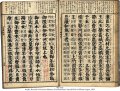
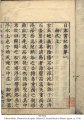
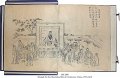
- MS 5329 Japan, 1800
- MS 5330 Japan, 1869
- MS 5331 Japan, 1837
- MS 5351 Israel, 1889
GIFTS FROM THE HIGH AND MIGHTY OF ADAB TO THE HIGH PRIESTESS, ON THE OCCASION OF HER ELECTION TO THE TEMPLE
![]()
MS in Sumerian on creamy stone, Sumer, 26th c. BC, 1 tablet, 9,2x9,2x1,2 cm, 6+6 columns, 120 compartments of cuneiform script by an expert scribe.
Binding: Barking, Essex, 2000, brown mottled calf folding case by Aquarius.
Commentary: This tablet has no precedent. It is one of the earliest manuscript witnesses of religious practise. With its polished surface and staggering beauty, it would have been used as an illustration in most textbooks on the ancient Near East, had it been better known. Illustrated here for the first time.
LEXICAL LIST OF GODS' NAMES IN ORDER OF SENIORITY AND IMPORTANCE: ENLIL, NINLIL, ENKI, NERGAL, HENDURSANGA, INANNA-ZABALAM, NINEBGAL, INANNA, UTU, NANNA
![]()
MS in Sumerian on clay, Sumer, 2400-2200 BC, 1 tablet, 4,7x4,4x1,7 cm, single column, 5+5 lines in cuneiform script.
Binding: Barking, Essex, 1998, blue cloth gilt folding case by Aquarius.
Context: Other tablets with Gods' names, are MSS 2200/318, 2200/321, 2200/332 and 2422.
Commentary: This is clearly the beginning of the list, since Enlil, god of the town of Nippur, was the practical head of the pantheon at this time.
The Sumerian, Babylonian and Assyrian religions had thousands of gods, hence extensive lists to keep track of them.No other copy of this particular list is so far known.
DESCENT OF INANNA TO THE UNDERWORLD; SUMERIAN MYTH
![]()
MS in Neo Sumerian on clay, Babylonia, 1900-1700 BC, 1 tablet, 24x10x4 cm, 3+3 columns, 208 lines (of 410) in cuneiform script.
Context: This is tablet 1 of 2. Tablet 2 is MS 3282.
Commentary: There are similarities to the Greek myth of Persephone who was abdicted to the underworld by Hades, and released to see her mother, Demeter. The text also has parallels to the passion and resurrection in the Gospels.
See also MS 5283 with the story of Orpheus and Euridice.
See also MS 2367/1, Enhedu'Anna: Hymn to Inanna, Babylonia, 20th - 17th BC
RITUAL OF THE PRIESTS' DIALOGUE WITH THE GODS CONCERNING INCANTATIONS AGAINST MIGRAINE, DRAWING ON MYTHOLOGICAL SOURCES
![]()
MS in Neo Sumerian on clay, Babylonia, 2000-1800 BC, 1 tablet, 9,3x5,5x2,5 cm, 15+21 lines in cuneiform script.
Binding: Barking, Essex, 1998, blue quarter morocco gilt folding case by Aquarius.
Commentary: All incantation texts begin with an outline of some complaint, physical or psychic, experienced by somebody. There is then a magical part that usually has the priest going off to "consult" with Inanna or another god. Finally the text ends with the gods' revealed advice for action which will lead to the resolution of the problem. The incantation texts used by the priest were something he knew and would probably be the same in each case; so this rite was an unwritten part of all incantation texts. The present text is this rite, possibly written down to assist novice priests. The text is possibly unique.
See also MS 5108, Atra-Hasis Epic, Babylonia, 1900-1700 BC
See also MS 2447, Incantation from the series Hulbazizi, Assyria, 900-600 BC
INCANTATION. EA, SHAMASH, ASARLUHI, GREAT GODS -. YOUR INCANTATION IS LIFE, YOUR NAMES ARE PROSPERITY, YOUR UTTERANCE IS LIFE -
![]()
MS in Assyrian on clay, Assyria, 800-600 BC, 1 tablet, 10,8x6,1x2,3 cm, 34 lines in cuneiform script, a pierced lug for suspension, 2 inscriptions and 3 pair of crossing lines on the lug handle.
Commentary: This is the best preserved of only 6 such incantation amulet tablets known. The magic is related to the Maqlu type, but part of the text here seems to be new. Ea or Enki, was the god of the fresh water, creation, destinies, and was especially associated with wisdom, magic and incantations. He was one of the 3 supreme male gods, together with An and Enlil. Shamash or Utu, was the sun god and god of justice, truth and right. Asarluhi, son of Enki, city god of Kuara near Eridu, also used as an alternative name for Marduk in incantations and prayers.
See also MS 2180, Inscription to Nabu, Assyria, ca. 646 BC
See also MS 1638, Book of dead, Egypt, 15th c. BC
BOOK OF THE DEAD, CH. 110 & 125, WRITTEN FOR THE DECEASED WAB PRIEST OF AMON-RA, KING OF THE GODS
![]()
MS in Middle Egyptian on papyrus, Egypt, 20th dynasty, 1186-1069 BC, 1 scroll (complete), 16x102 cm, main texts in 19+19+10 columns, (13x97 cm), cursive hieroglyphs, signed by the scribe Nespaneferher, priest of Amon-Ra, a very large miniature, 5x32 cm, of agricultural activities in Fields of Blessed, another miniature, 7x32 cm, with the 14 divisions of the Underworld, and a 3rd miniature, 13x16 cm, where the Deceased offers to Osiris and asks for offerings, all in black and red.
![]()
Binding: Egypt, 1186-1069 BC, hollow wood statuette of Osiris, 47 cm tall, which contained the papyrus scroll. The statuette and its base painted greyish blue, Osiris wearing the crown of Upper Egypt, holding his royal emblems, the flail and the crook. This original "book-box" was opened in 1978 in Staatliche Sammlung Ägyptischer Kunst, München, and the papyrus conserved.
Context: 3 more papyrus scrolls of the same period, together with their wood statuettes, are in the Egyptian Department of the Metropolitan Museum of Art, New York.
Provenance: 1. Mathias Komor, New York (1978); 2. Sotheby's 11.7.1988:41.
Commentary: Among the earliest "book-boxes" extant, about 1500 years older than any book-box or binding in private ownership, cf. the 4th c. leather binding, MS 1804/1.
See also MS 125, Book of dead, Egypt, 325-30 BC
THE ICARIUS MIRROR
IKRA THE KING FROM MOUNT OSSA OF IXION,
THREE THINGS ON THIS SIDE HE WENT TO SEE,
I LONG FOR THE BROTHER ALSO TO GO,
I CUT THE GRAPES ABUNDANT OF THE WINE-STOCK TO OWE,
TO THE WINE PRESS! YOUNG BOY,
THREE ON THE SIDE BEDEWED![]()
MS in Etruscan on bronze, Etruria, Italy, 6th c. BC, 1 mirror, diam. 13 cm, 4 lines or sections along the raised rim and 3 captions in early Etruscan script, illustration of Icarius standing, with a club over his shoulder, with a Phrygian style cap, in a chariot pulled by two bearded centaurs, one carries a bunch of grapes, the other a long cutting knife and a wine bag, above Icarius is a cherub sprinkling water, below is Icarius' dog Maera running.
Context: This is the longest Etruscan mirror inscription known. For other Etruscan inscriptions, see MSS 565/1 and 564.
Provenance: 1. Silvio Salvino Collection, Switzerland (ca. 1965-2000); 2. Pars Antiques, London.
Commentary: So far this seems to be the only contemporary example of Etruscan literature recorded, and where the text is illustrated in addition. This records a part of Greek mythology that is not yet fully known, adding some new information.
Icarius was the hero of the Attic town of Icaria who had a daughter, Erigone. He had been taught by Dionysos to make wine and the Bacchalian rites, and he loaded a wagon with wine skins, called his faithful dog Maera, and set off to spread the word about wine. He gave wine to some sheperds who got drunk, and who believed Icarius had tried to poison them. They beat him to death with clubs and buried him under a tree. Erigone looked everywhere for her father, and was finally led to him by Maera, who howled over his grave. Distracted with grief, she hanged herself from the tree over the grave. The dog also killed itself by jumping into a well. Dionysos was angered and sent a plague over the land, and the Athenian maidens, in a fit of madness, hanged themselves from trees. Dionysos honored them by placing Icarius in the sky as the constellation Boetes, Erigone as Virgo, and Maera as the Dog Star.
The unique text of the present mirror resisted all attempts to be read, until Mel Copeland succeeded. He is hereby credited with both the reading and the information of the mythological context, for an extensive discussion of the mirror and the mythology. Published: Mel Copeland, Etruscan phrases, Schøyen mirror MS 565/2, "Icarius", at www.maravot.com/Schoyen_mirror.ikarius.html, 2005.
HOMER: THE ILIAD XVI:2 - 15, 32 - 37, 40 - 43, 47 - 61, 75 - 91
![]()
MS in Greek on papyrus, Egypt, 1st c. BC - 1st c. AD, 5 fragments from a scroll, largest 8x10 cm and 11x3 cm, parts of 2 columns, (column size 35x17 cm), 15+23 lines of originally ca. 45 lines in Greek uncial.
Provenance: 1. Antiquity dealer, Cairo (1969); 2. Dr. Anton Fackelmann Sr., Wien, Austria, MS 36 (-1986); 3. Anton Fackelmann Jr., Steyr, Austria (1986-1998).
Commentary: The text is the song of Patroklos, inkluding Zevs, Hera, Apollon, Athena, and others of the gods from the Greek Pantheon. Homer is represented in The Schøyen Collection by MS 112/33, The Iliad XV:511-515, ca. 100, MS 112/57, The Iliad II:195-197, 2nd c., MS 112/80, The Iliad XI: 1-5, 2nd c. (the earliest witness to the text and not otherwise extant on papyrus); MS 2628, The Iliad XVI:2-15. 32-37, 40-43, 47-61, 75-91, 1st c. BC-1st c. AD; MS 5094, Homer: The Iliad XVII:637-644, 679-685, + 1 extra and 1 new line (earliest witness to text); MS 5069, The Odyssey XII: 9 - 14; 17 - 28; 41 - 46, late 3rd -2nd c. BC (earliest witness to text); and MS 2629, The Odyssey XI: 509-603, ca. 1st c.
Published: Papyrologica Florentina, vol. XXXV. Rosario Pintaudi: Papyri Graecae Schøyen. Firenze, Edizioni Gonnelli, 2005 (Manuscripts in The Schøyen Collection V: Greek papyri, vol. I), pp. 9-14.
Exhibited: Bibelmuseum, Münster, 1986 - 2002.
EURIPIDES: BACCHAE, 681-6, 725-730, 1032-34, 1068-71
![]()
MS in Greek on papyrus, Egypt, 6th c., 4 fragments, 3,5x8,1 cm, 3,9x9,0 cm, 3,0x7,6 cm, 3,2x9,0 cm, single column, 3-5 lines in an informal sloping Greek half-uncial.
Context: The 4 fragments were used as pastedown in a leather binding. Part of the leather adheres to fragment 3. Fragments 1 and 2 origins from a late classical codex. Fragment 3 is uninscribed, but has offsets of Bacchae 1032-4, and 725-30. Fragment 4 has 1 line of a commentary in Greek cursive, and offsets of Bacchae 1069-71.
Provenance: 1. Mohammed Sha'ar, Cairo; 2. Issa Marogi Collection, Jerusalem (ca. 1955-ca. 1990); 3. Heirs of Marogi family, Jerusalem (-1993); 4. Fayez Barakat, Los Angeles. California, March 1994.
Commentary: Bacchae (The women of Bacchus, or Dionysus) was Euripides' (485-406 BC) last play, written 408-606 BC for king Archelaos of Macedonia. It is the only preserved Greek Dionysian cult drama. Dionysus, god of wine and ecstasy, was son of Zeus and Semele, daughter of Cadmus, king of Thebes. Euripides' drama was about the introduction into Greece of a new religion, different from the cult of the traditional 12 Olympian gods. Nevertheless Dionysius' name has been found on linear B tablets, indicating his name and cult might be Minoan or Mycenaean in origin. Apart from the present papyrus, only 7 papyri of Bacchae survive.
Published: Papyrologica Florentina, vol. XXXV. Rosario Pintaudi: Papyri Graecae Schøyen. Firenze, Edizioni Gonnelli, 2005 (Manuscripts in The Schøyen Collection V: Greek papyri, vol. I), pp. 29-32.
See also MS 593, Aristophanes, Euripides and Hesiod, Crete, 2nd half 15th c.
23.6. MITHRAISM AND ROMAN RELIGION
MUMMY FUNERARY INSCRIPTION OF THE PRIEST OF MITHRAS, ORNOUPHIOS, SON OF ARTEMIS, LIVED 14 YEARS, CHOIAK 15, THE 3RD YEAR
![]()
MS in Greek on linen cloth, Egypt, late 1st c. BC, 1 cloth (complete), 14x39 cm, single column, (9x21 cm), 6 lines in Greek half-uncial. Provenance: 1. H.P. Kraus, New York.
Context: The collection of the renowned papyrologist Prof. Atiyah consisted of more than 677 papyri, mainly originating in Middle Egypt, including Oxyrhynchus and Fayum. The first part of 140 papyri (H.P. Kraus cat. 105(1961)), is now in Yale, Beinecke Library, while 242 Greek papyri is MS 244 and 295 Coptic papyri is MS 245 in The Schøyen Collection, see also MS 108.
Provenance: 1. Aziz Suryal Atiyah, Utah, USA ( - ca. 1960); 2. H. P. Kraus, New York, USA, (ca. 1960 - ); 3. Richard Linenthal Collection, London.
Commentary: Apart from this MS, no documents or scriptures seem to be extant on Mithra. Scholars have been able to analyze the cult based on fragmentary references, short stone inscriptions, bas-reliefs and sculptures. Mithra was an ancient Indo-Aryan god of the Persians and Indians, identified with the sun, cattle, agriculture, war, truth and immortality. Introduced into the Roman Empire in the 1st c. BC, Mithraism became the most popular and widespread of the foreign religions adopted by the Romans. It lasted until Christianity was adopted by Constantine the Great in 311.
1. VERGIL: BUCOLICON 2. VERGIL: GEORGICON 3. GIUSEPPE DELLA SANTA: INTRODUCTION AND VERSE IN PRAISE OF LEOPOLD I GRAND DUKE OF TOSCANA ![]()
MS in Latin on vellum, Firenze, 1771, 59 ff., 22x15 cm, single column, (17x12 cm), 29 lines in rustic capitals and Italic script (text 1) by Giuseppe della Santa, as facsimile of Codex Mediceus of 5th c., dedication copy to Leopold I Grand duke of Toscana.
Binding: Firenze, late 19th c., paper wrappers in 4 volumes, stitched. Cloth fall-down-back box, gilt-lettered red morocco spine strip.
Context: The whereabouts of the Aenid which originally followed this MS, is unknown. For other mss of Georgics see MS 61 of 11th c. and MS 1395 of 12th c.
![]()
Provenance: 1. Biblioteca Medicea Laurenziana, Firenze (1771); 3. Grand duke Leopold I, Toscana (1771-); 3. Bernard Breslauer, New York (-2005); 4. Christie's New York 27.6.2005: 1170.
Commentary: Vergil's (70-19 BC) works survive in hundreds of MSS, headed by the 3 famous codices, Codex Mediceus, Laur. 39.1 of the 5th c., Codex Platinus, Vatican Pal.lat. 1631, written ca. 500, and Codex Romanus, Vatican lat.3867 also written ca. 500. All three written in rustic capitals. Bucolicon (Latin Bucolica or Eclogae) are ten unconnected pastoral poems written in imitation of Theocritus. Georgicon or Georgica (husbandry) is written in hexameter in imitation of Hesiod's Works and Days (see MSS 593 and 5068), but is far more than a practical guide to farming. It ends with the episode of Aristaeus together with the story of Orpheus and Eurydice. Aristaeus, son of Apollo and the nymph Cyrene, was a god of various kinds of husbandry including bee-keeping and hunting. Orpheus, a pre-Homeric poet, son of a Muse, married the nymph Eurydice, who died while being pursued by Aristaeus. Orpheus went down to the Underworld to recover her from Persephone or Proserpina, daughter of Zeus and Demeter, snatched away to be queen of the Underworld by Hades, but Orpheus failed. The famous story is also told by Ovid and Claudian, and was given a more hopeful ending in Gluck's opera. For another, and the oldest account of a descent to the Underworld, see MS 3281 from about 1800 BC.
Giuseppe della Santa, scribe of Biblioteca Medicea Laurenziana. Duke Leopold I of Toscana (1747-1792), Grand duke of Toscana (1765-1790), Holy Roman Emperor, and King of Bohemia and Hungary, Leopold II (1790-92).See also MS 1720/1, Curse: To the god Mercury Arverius. England, ca. 150-300
23.7. GERMANIC AND NORSE RELIGION
EMSN, INSCRIPTION ON A VIKING THOR'S HAMMER
![]()
MS in Old Danish or Latin(?) on bronze, Yorkshire, England, ca. 1000, 1 hammer-headed staff, 4,3x0,9-1,2 cm, 1 line in capitals with an uncial M, preceded by a cross, pierced at one end for use as a pendant, a punched cross and decoration at the hammer end.
Provenance: 1. Excavated in Yorkshire, England; 2. Neil Clayton, Lavenham, Suffolk (- 1993); 3. Jeremy Griffiths, Oxford.
Commentary: Around 50 examples of Thor's Hammer are found widely distributed throughout Scandinavia from 9th to 11th c., with a few examples from England. As amulet it symbolises the god's protection of the wearer. The 2 crosses suggest a Christian owner, and makes it an unusual and interesting example of the birth of Christianity among the Vikings, still clinging to the old heathen god Thor. Thor (Anglo-Saxon Thunor and German Donar) was the son of Odin the Allfather. He was the god of order and chief antagonist of the giants, the demons of chaos. His chief weapon was his shorthandled hammer. His main enemy was the serpent, Jörmundgand, symbol of evil, who surrounded the world. Thor was sometimes equated with Jupiter. Jove's Day became Thor's Day (Thursday). He causes the thunderstorms whenever he uses his hammer or rides his chariot across the heavens.
See also MS 1697, Runic incantation formula. Denmark, ca. 1000
HÁVAMÁL, COMMENTARY BY PÁLMI JÓSEFSSON AFTER SIGURDAR NORDAL
![]()
MS in Icelandic on paper, Iceland, 1925, 24 ff. (-3), 17x10 cm, single column, (15x10 cm), 18 lines in cursive script by Pálmi Jósefsson.
Binding: Iceland, 1925, yellow paper covers, stapled, by Bókaverzlun Gudm. Gamalíelssonar, titled Stílabok on front cover, tables on the back.
Provenance: 1. Pálmi Jósefsson, Iceland (1925-); 2. Antikvariat Bragi Kristjónsson, Reykjavik, Bóksöluskrá nr. 94 (Dec. 2005):85.
Commentary: Håvamål (words of the one on high), the words of Odin (Woden/Wotan) the father of gods. It includes the account of his theft of the precious poetry, called the sacred mead which he brought to the gods. It also includes the account how Odin acquired wisdom by hanging nine nights on the World Tree and by sacrificing one of his eyes. He was pierced by a spear, he was a sacrifice to himself, being nearly dead he received the wisdom that belongs only to the dead, as well as the ability to write runes. Odin was the god of the dead and of war. Those who fell in battle came to Valhalla, and would live in bliss there until Ragnarok (Judgement day, Götterdämmerung) when they would join Odin in his final fight against Fenrisulven, a monstrous wolf.
See also MS 2128, Snorre Sturlason: Sagas of the Norse Kings. Norway, 1711-1720
See also MS 4517, Caius Julius Caesar: Commentarii de bello gallico. Italy, 3rd quarter 15th c. References to German religion compared to Gallic
PROGRAMMATIC STATEMENT OF MAYA RITUAL AND KINGSHIP, POINTING TO THE USE OF RITUAL LIBATION UNDER DIVINE SANCTION, AND PORTRAYING RITES OF PASSAGE FROM SEMI-DIVINE RULER TO DIVINE GOD, WITH COLOPHON: "IT IS WRITTEN, WITH THE SANCTION OF THE GODS, PATRONS OF THE SCRIBES, BY THE SCRIBE, (HIS NAME), ON HIS BOWL, LORD'S NAME (OWNER), FOR THE HOLDING AND DRINKING OF CACAW"
![]()
MS in Mayan on clay, North Eastern Honduras, ca. 600-850, 1 cylindrical vase (complete), 20x18 cm, with 1 horizontal and 4 vertical bands of 32 Mayan late Classic hieroglyphs, in a bold clear script in brown paint on a light brown-orange ground, 1 jaguar masked figure, and 3 attendants in full ceremonial costumes painted in red and black.
Context: Another Maya vase with a similar dancer, see www.mayavase.com, # 774. A Mayan Codex vase of ca. 900, see MS 693.
Provenance: 1. Unidentified temple, North Eastern Honduras; 2. Bruce Ferrini, Akron, Ohio.
Commentary: The main figure, a "comic dancer", in net suit with jaguar headdress, is being accompanied by musicians. The attendant with black-painted face is scattering droplets of blood from his left hand. The second attendant holds two rattles. The third attendant is playing a rasca, a segmented musical instrument that is scraped with a shell to make a rhythmic sound. Cf. Justin Kerr: "The Popol Vuh as an instrument of power".
Published: Justin Kerr: The Maya Vase Book, Vol. 4, p. 600.
See also MS 693, Burial text, Guatemala, ca. 900
Other American Indians' religions, see Collection 4.8
23.9. Australian aborigine religion
CYLCON (YURDA), A MAGICO-RELIGIOUS TALLY WITH MARKS POSSIBLY RECORDING DISTANCES AS DAY'S MARCHES IN DIFFERENT DIRECTIONS, OR RECORDING THE NUMBER OF YOUNG MEN TO PASS THE INITIATION RITUALS TO MANHOOD OF THE "BORA", FURTHER POSSIBLY REPRESENTING THE POINTING OF THE "DEATH-POINTER-BONE", MAGIC CAPABLE OF CAUSING DEATH TO ANYONE DIVULGING THE TRIBE'S SECRET RITUALS
![]()
MS on hard silcrete, High Glen Lyon, Western New South Wales, Australia, ca. 20000-3000 BC, 1 oval-conical cylcon, 32x8x5 cm, incised with longitudinal lines and 4 series of 7+6+9+12 short parallel transverse lines, concave base.
Provenance: 1. Found High Glen Lyon, New South Wales, Australia (ca. 1958); 2. Shearing Contractor Peter Manoel, New South Wales, Australia (1958-1973); 3. H. Gallasch Museum, Australia (1973-); 4. Sam Fogg Rare Books Ltd., London.
Commentary: Cylcons are earlier than churingas. There is no certain ways to date individual cylcons. The oldest cylcon/message stone found in a dateable archaeological context is about 20,000 years old. The simple line motifs of the oldest cylcons represent the earliest art of the Aborigines, from a very early period of occupation. In Australian nomenclature this is the colonizing period, or early Stone Age, ca. 50,000/40,000-3,000 BC. With the earliest rock-carvings and -paintings, the cylcons represent the oldest form of communication and art; and they represent the oldest religion still observed. Only 2 Aborigines have been able to communicate their name of the cylcons: Yurda, and Wommagnaragnara (Heart of the snake), respectively. Other uses as tallies are possible, such as counting of dead people, warriors, emus, measures of nardo seeds, or mapping purposes counting day-marches in various directions. Later the use could also change to other magic rituals, some involving the chipping off smaller flakes, and the practical use for pounding and crushing. Much more research is needed before the cylcons' real age and significance can be properly understood and appreciated. The term cylcon is derived from the title of R. Ethridge's publication: The Cylindro-conical and Stone Implements of Western New South Wales and their significance. Ethnological Series No. 2, Memoirs of the Geological Survey of New South Wales, 1916:1-41.
Exhibited: The Norwegian Intitute of Palaeography and Historical Philology (PHI), Oslo, 13.10.2003-
CYLCON (YURDA), A MAGICO-RELIGIOUS TALLY WITH MARKS POSSIBLY RECORDING THE NUMBER OF YOUNG MEN TO PASS THE INITIATION RITUALS TO MANHOOD OF THE "BORA", FURTHER POSSIBLY REPRESENTING THE POINTING OF THE "DEATH-POINTER-BONE", MAGIC CAPABLE OF CAUSING DEATH TO ANYONE DIVULGING THE TRIBE'S SECRET RITUALS
![]()
MS on chalk-like stone, New South Wales, Australia, ca. 20000-3000 BC, 1 oval-conical cylcon concave base, 12,2xdiam.4,2 cm, 3 central arrows pointing forwards, parallel lines in 5 longitudinal series of 7-8 lines each, 4 circumferential rings round apex, 17 short longitudinal incisions around base.
Provenance: 1. Found in New South Wales, Australia; 2. H. Gallasch Museum, Australia (1973-); 3. Sam Fogg Rare Books Ltd., London.
Commentary: This unusual miniature cylcon is a good example of linear art. Cylcons are earlier than churingas. There is no certain ways to date individual cylcons. The oldest cylcon/message stone found in a dateable archaeological context is about 20,000 years old. The simple line motifs of the oldest cylcons represent the earliest art of the Aborigines, from a very early period of occupation. In Australian nomenclature this is the colonizing period, or early Stone Age, ca. 50,000/40,000-3,000 BC. With the earliest rock-carvings and -paintings, the cylcons represent the oldest form of communication and art; and they represent the oldest religion still observed. Only 2 Aborigines have been able to communicate their name of the cylcons: Yurda, and Wommagnaragnara (Heart of the snake), respectively. Other uses as tallies are possible, such as counting of dead people, warriors, emus, measures of nardo seeds, or mapping purposes counting day-marches in various directions. Later the use could also change to other magic rituals, some involving the chipping off smaller flakes, and the practical use for pounding and crushing. Much more research is needed before the cylcons' real age and significance can be properly understood and appreciated. The term cylcon is derived from the title of R. Ethridge's publication: The Cylindro-conical and Stone Implements of Western New South Wales and their significance. Ethnological Series No. 2, Memoirs of the Geological Survey of New South Wales, 1916:1-41.
See also MS 4610, Churinga, Australia, before 500
CHURINGA: WAVY PARALLEL LINES LINKING CONCENTRIC CIRCLES REPRESENTING WATERHOLES, TOTEM CENTRES OR CAMP SITES IN THE ABORIGINE'S MYTHOLOGICAL LANDSCAPE
![]()
MS in Aborigine tribal language on grey stone, Northern Territories, Australia, very early, before 1800, 1 boatshaped churinga, 37x12x1 cm, patterns incised with a incisor tooth of an opossum, and rubbed with grease and red ochre during the ceremonies, the ochre still sticks in the groves.
Provenance: 1. Presented to Ursula Padman, Leprosy control officer and honorary Tribal Elder 1930's-1940's; 2. Sam Fogg Rare Books Ltd., London.
Commentary: There is no certain way to date the old churingas that are from the pre-contact period (before 1780). They can be as old as the Aboriginal culture, 40-50,000 years. With the earliest rockpaintings and carvings, the cylcons and churingas represent the oldest form of communication and art, still present, and they represent the oldest religion still observed. The aborigine owner's belief is that his kuruna or spirit is intimately associated with his churinga. Even today the whole of Australia is dotted over with Knanikillas, or local totem centres. Each of these has a sacred storehouse for the tribe's and individuals' churingas, guarded by the inkata. Women and men that had not passed through the ceremonies of circumcision and subincision, were not allowed to approach the storehouse, Pertalchera. The aborigine people of the Central desert read the patterns on the churinga as representations of nature, a kind of map or site. The icons are not literally figurative. Rather they can be interpreted as a whole range of natural phenomena that are stereotyped in their typical form, so they become an artistic system. Each churinga had its own personal "name", which had to be sung whenever it was being inspected or handled. The name was one of the verses from the sacred song cycle related to the actual totem centre.
CHURINGA OF PAPATJOKURPA OF LURITJA TRIBE, REPRESENTING THE PLACE TOO LOO LA MAOUNM OONJA (CENTRAL CONCENTRIC CIRCLES) WITH THE TOTEM WEEI CHILDREN, SITTING (U-SHAPES), SURROUNDED BY BOOMERANGS THROWN BY THE WEEI WHO ALSO CATCHES THEM SO THEY NEVER FALL TO THE GROUND (4 SHORT PARALLEL LINES), ABOVE AND BELOW CHEST MARKS, SCARIFICATION TATOOS (8 LONG PARALLEL LINES), EVERYTHING SURROUNDED BY FLIES (DOTS).
![]()
NAME SONG:
YALKERI MURA MURA
MUNKARA TALU KURA PARAKANNEE
YALKERI MURA MURA
MUNKARA TALU KURA PARANNEEMS in Aranda on green chist stone, Too Loo La Maounm Oonja, Central Australia, before 1800, 1 oval churinga, 52x18 cm, aboriginal symbols incised with an incisor tooth of an opossum, rubbed with grease and ochre during the ceremonies, the ochre still sticking in the grooves.
Context: Papatjokurpa had 5 churingas, 1 larger than the present, and 3 small ones, all with nearly identical symbols. The other 4 are now in a private collection in Sydney.
Provenance: 1. Kristian Pareroultja of Luritja tribe (-1949); 2. Rex E. Battarbee, Ntarea (1949-); 3. Sam Fogg Rare Books Ltd., London.
Commentary: Rex Battarbee (1893-1973), watercolorist and teacher of the Arunta School of Aboriginal painting, is a major figure in the history of Central Australia, being deeply involved in Australian Aboriginal artistic culture and tradition. His autograph notes follow this churinga, recording the details of the song this churinga is associated with, and a drawing of it with the interpretation of its symbols. There is no certain way to date the old churingas that are from the pre-contact period (before 1780). They can be as old as the Aboriginal culture, 40-50,000 years. With the earliest rockpaintings and carvings, the cylcons and churingas represent the oldest form of communication and art, still present, and they represent the oldest religion still observed. The aborigine owner's belief is that his kuruna or spirit is intimately associated with his churinga. Even today the whole of Australia is dotted over with Knanikillas, or local totem centres. Each of these has a sacred storehouse for the tribe's and individuals' churingas, guarded by the inkata. Women, and men that had not passed through the ceremonies of circumcision and subincision, were not allowed to approach the storehouse, Pertalchera.
The aborigine people of the Central desert read the patterns on the churinga as representations of nature, a kind of map or site. The icons are not literally figurative. Rather they can be interpreted as a whole range of natural phenomena that are stereotyped in their typical form, so they become an artistic system. Each churinga had its own personal "name", which had to be sung whenever it was being inspected or handled. The name was one of the verses from the sacred song cycle related to the actual totem centre.
NAVAJO SHAMAN PICTOGRAPHIC RITUAL BOOK, WITH SEQUENCE NOTATIONS, INDICATIONS FOR CHANTING AND DANCE MOVEMENTS AND MNEMONIC DRAWINGS OF LISTS OF SYMBOLS, REPRESENTATIONS, SANDPAINTING, AND SHAMANISTIC RITUALS
MS in Navajo on paper, Arizona, U.S.A., ca. 1900, 18 pp.+66 blank ff., (-15), 26x20 cm, 420 symbols, pictographs and drawings of shamanistic rituals.
Binding: U.S.A., ca. 1900, cover missing, sewn on 6 cords.
Provenance: 1. Shaman family and heirs, Navajo reservation, Arizona; 2. Bruce Ferrini, Akron, Ohio.
Commentary: This MS represents the very rarest type of North American Indian pictographic writing, since shamanistic rituals were not meant to have been recorded or revealed. 3 sand paintings are drawn, one with 4 pictographic wideboards, which are written invitations to the deities for their presence at the chant ceremony. The sandpainting is completed in one day and is destroyed after the ceremony. This is one of the few cases where the Medicine man (Shaman or Chanter) has recorded the sandpaintings himself. They are otherwise known through later tapestries and whites' recordings. Uniquely, this MS also records the procession route along 2 series of sandpaintings and other objects.
HANNAH KIGUSIUQ: EXTENSIVE EXPLANATIONS TO COMPLICATED DRAWING OF INUIT WOMAN ATTACKING WITH KNIFE A SHAMAN WITH CARIBOU HORNS AND FEET, ANOTHER WOMAN CARRYING AWAY FROM THE WINTER CAMP, A HUMAN FIGURE WITH 3 PAIR OF EYES AND 4 LEGS, A CHILD THROWING A SNOWBALL AT ANOTHER CHILD, A SHAMAN WITH POLAR BEAR TEETH ATTACKING AN IGLOO WITH KNIFE, WITH OTHER INUITS AND SHAMAN HELPERS IN FORM OF BIRDS
![]()
MS in Eastern Arctic Inuktitut on paper, Baker Lake, Nunavut Territory, Canada, 1978, 1 f., 58x76 cm, (12x25 cm), 9 long lines + 43 short lines in Inuktitut syllabic script, autograph, signed, inside pencil drawing.
Provenance: 1. Hannah Kigusiuq, Baker Lake, Nunavut Territory, Canada (1978); 2. Sanavik Cooperative, Baker Lake, Nunavut Territory, Canada; 3. Gallerie aux Multiples collections, Québec.
Commentary: In 1876 Edmund James Peck adapted a system of syllabic writing, that earlier had been invented by James Evans for the Cree Indians, into Inuktitut language. The syllabary has 15 basic signs for the vocals i, u, a, the consonants and 2 diphthongs. Those are turned 90 or 180 degrees to represent the various syllables, in all 45 different sign positions. Hannah Kigusiuq (also spelt: Keegoaseat, Keegooseot, Keyousikuk), born 1931, Best known for her carefully controlled graphic pencil line drawings like the present one, in which she situates large numbers of people and animals in complex relationships with one another, frequently adding inuktitut syllabic notations to clarify her intent , or to present conversations among individuals. (Marion E. Jackson: North American women Artists of the 20th century. A biographical dictionary, 1955.) From 1970 to 1996 she participated in 44 exhibitions. She is represented in 18 public art galleries, museums and university collections.
SAMI SHAMAN'S RUNIC DRUM WITH A CENTRAL SUN WITH 4 RAYS, THE GODS OF THUNDER AND WINDS, THE MAIN GOD, RADIEN-ATZJE, AND HIS SON RADIEN BARDNE, THE MOTHER GODDESS, MADDA-RAKKA, AND 2 OF HER DAUGHTERS, THE RULER OF THE UNDERWORLD, ROTA, THE HOLY MOUNTAIN OF THE DECEASED, THE DWELLING OF THE DEAD AND A SAMI GRAVE, A SHAMAN AND HIS RUNIC DRUM, A SAMI CAMP WITH TENT, DOG AND REINDEER FENCE, A BOAT WITH MAST, FISHERMAN WITH BOAT AND NET, A SAMI HUNTING BEARS, A WOLF (THE DOG OF THE DEVIL), 2 "GAND" BIRDS AND THE CHURCH OF THE HOLY GHOST
![]()
MS in Sami on reindeer skin, Karasjok, Norway, 2005, 1 drum (runebomme), 47x31x9 cm, 45 symbols and glyphs by Berit Marie Kemi, with a drum hammer of reindeer horn with cloth head.
Context: Copied after a runic drum from Foldalen at Høylandet, Namdalen, Norway, which was confiscated in 1837, now at Städtischer Henneberger Museum, Meinigen, Germany; No. 30 in Ernst
Manker: Die Lappische Zaubertrommel II, Uppsala 1950, Acta Lapponica VI.Provenance: 1. Berit Marie Kemi, Karasjok, Norway.
Commentary: The drum is called runebomme or runpampa or gåbdie; the hammer is called ballem or vietjere. The old Sami religion was based on animism and shamanism. The forces of nature were personified by the wind man (Biegg-olmai), the god of thunder (Horag alles) and other gods of nature. The Sami shaman (Noaidi) drummed the runic drum and sang (joiked) to get in ecstasy in order to travel to the Netherworlds to pick up lost souls, or to Heavens, or to look into the future by listening to the speaking sound of the drum. The drum has also a practical use for hunting, herding reindeers or as a compass. When the Christian faith was taking over, the use of the runic drum was forbidden, and most drums burnt. Only ca. 50 old drums have survived today. Churches and crossed were frequently added symbols in this period of transition from one religion to a new one, but also in the vain hope to prevent confiscation of the runic drums.
See also collection 10. Magical literature
See also MS 4611, The Leviticus Dead Sea Scroll. Qumran, 30 BC-68 AD
BIBLE: GENESIS 1:1 - 35:12
![]()
MS in Hebrew on vellum, Egypt, ca. 14th c., 1 scroll, 46x ca.500 cm, 49 lines per column in a square Hebrew book script.
Provenance: 1. The Cairo Genizah?, Fustât, Egypt (-ca. 1900); 2. Antiquity dealer, Cairo (1969); 3. Dr. Anton Fackelmann Sr., Wien, Austria (1969-1986); 4. Anton Fackelmann Jr., Steyr, Austria (1986-1998).
Exhibited: Bibelmuseum, Münster, since 1986.
See also MS 1640, Bible: Numbers; Samaritan Tora. Nablus or Damascus, 13th c.
See Collection 1.1
See MS 1926/2, The Genesis Apocryphon Dead Sea Scroll. Qumran, ca. 4 BC-68 AD
![]()
1. BIBLE: ? KINGS, WITH COMMENTARY OF RASHI
2. BIBLE: ? CHRONICLES, WITH COMMENTARY OF RASHI
3. BIBLE: ISAIAH, WITH COMMENTARY OF RASHIMS in Hebrew on vellum, Germany, 12th-13th c., 4 ff. + 2 partial ff. (3 bifolia), 20x17 cm, single column, (12x7 cm), 25 lines in a fine square Hebrew book script with portions of the Haftoroth, the gloss in elegant designs in Hebrew cursive.
Binding: Barking, Essex, 2000, red cloth gilt folding case by Aquarius.
Provenance: 1. Bernard Quaritch Ltd., Cat. 1147(1991):122.
Commentary: The great Jewish scholar, Rashi (1040-1105), wrote the most influential commentary of the whole on the Hebrew Bible, partly making use of the commentary of Nicolaus de Lyra.
See also MS 1862, Bible: Leviticus; Rabbi Tanchum Yerushalmi, quoting the Babylonian Talmud. Palestine or Iraq, 13th c.
ISAAC BEN JACOB ALFASI: COMMENTARY ON THE TALMUD, CH. 331-335, HILKHOT RAV ALFAS
![]()
MS in Hebrew on paper, Palestine or Iraq, 12th c., 6 ff., 17x13 cm, single column (12x9 cm), 16 lines in an oriental semi-cursive Hebrew book script.
Binding: England, 1921-1942, brown cloth.
Provenance: 1. The Cairo Genizah, Fustât, Egypt (-ca. 1896); 2. David Solomon Sassoon's Library, Hertfordshire, MS.525 (1921-1942); 3. David Solomon Sassoon's trustees (1942-1994); 4. Sotheby's 21.6.1994:4 (5th Sassoon sale).
Commentary: This is almost certainly the oldest extant MS of the great commentary on the Talmud by Isaac Ben Jacob Alfasi (1013-1103), the most important Rabbinic codifier before Maimonides, and almost contemporary with the author. Second to the caves of the Dead Sea Scrolls, the great Genizah in Cairo is the most significant and evocative source for any fragments of early Hebrew MSS. The Genizah was fully unearthed from 1896. Probably no Egyptian finds, except that of Tutankhamon in 1922, has ever excited the public imagination so much at the time of the discovery. No single source has added so much to our knowledge of early Jewish culture. For half a century these were among the oldest Hebrew MSS known.
Literature: D.S. Sassoon: Ohel Dawid, Descriptive Catalogue of the Hebrew and Samaritan Manuscripts in the Sassoon Library, London 1932, I, pp. 155-6.
Exhibited: XVI Congress of the International Organization for the study of the Old Testament. Faculty of Law Library, University of Oslo, 29 July - 7 August 1998.
See also MS 1862, Bible: Leviticus; Rabbi Tanchum Yerushalmi, quoting the Babylonian Talmud. Palestine or Iraq, 13th c.
See also MS 1909, Manual of Discipline Dead Sea Scroll, Qumran, 1st c. BC
MOSES MAIMONIDES: HALAKHIC CODE, MISHNEH TORAH (REPETITION OF THE LAW), HICHOT PARA ADUMA, CH. 9-10
![]()
MS in Hebrew on paper, Egypt, early 13th c., 2 ff., 19x12 cm, single column, (18x11 cm), 15 lines in a semi-cursive Hebrew book script.
Binding: England, 1902-1942, in dark red cloth.
Provenance: 1. The Cairo Genizah, Fustât, Egypt (-ca. 1896); 2. David Solomon Sassoon's Library, Hertfordshire, MS.18 (1902-1942); 3. David Solomon Sassoon's trustees (1942-1994); 4. Sotheby's 21.6.1994:8 (5th Sassoon sale).
Commentary: This is an extremely early MS of a major work of Maimonides (1135-1204), the greatest Jewish scholar and philosopher of the Middle Ages. The fact that this MS comes from the Cairo Genizah at Fustât is important, for Maimonides was head of the Fustât community from about 1177 to 1204. The Cairo Genizah is the source of a number of autograph Maimonides MSS, such as British Library MS OR. 5519B. It is thus a provenance that brings us very close indeed to the author. Second to the caves of the Dead Sea Scrolls, the great Genizah in Cairo is the most significant and evocative source for any fragments of early Hebrew MSS. The Genizah was fully unearthed from 1896. Probably no Egyptian finds, except that of Tutankhamon in 1922, has ever excited the public imagination so much at the time of the discovery. No single source has added so much to our knowledge of early Jewish culture.
Literature: D.S. Sassoon: Ohel Dawid, Descriptive Catalogue of the Hebrew and Samaritan Manuscripts in the Sassoon Library, London 1932, I, p. 158.
Exhibited: XVI Congress of the International Organization for the study of the Old Testament. Faculty of Law Library, University of Oslo, 29 July - 7 August 1998.
See also MS 705, Rabbinic code, France, late 13th c.
See also MS 2195, Concordance to the Mishneh Torah of Maimonides, Egypt, 13th c.
1. BIBLE: EZEKIEL 1:5; 1:27 2. BIBLE: ISAIAH 6:3 3. HEKHALOT: PEACE BE UPON YOU, ANGELS ON HIGH; PEACE BE UPON YOU, COHORTS OF THE ARMY; PEACE BE UPON YOU, FLAMES OF BURNING; PEACE BE UPON YOU, WHEELS OF THE CHARIOT; PEACE BE UPON YOU, OFANIM AND CHERUBIM; PEACE BE UPON YOU, THE ANIMATE BEINGS OF THE THRONE OF GLORY; PEACE BE UPON YOU, THE SPIRIT OF FIRE THAT COMES FROM THE NORTH; PEACE BE UPON YOU, THE SPIRIT OF FIRE THAT COMES FROM THE SOUTH 4. MAY THERE BE HEALING FROM HEAVEN TO MIHRANAHID DAUGHTER OF AHAT, WHO IS CALLED KUTUS, AND MAY SHE BE HEALED FROM ANY SPIRIT OF SHIVERING THAT ENCIRCLES HER FACE, FROM THE SPIRIT OF CATARACT, FROM THE SPIRIT THAT SITS ON HER EAR AND SMITES THE BRAIN AND THE OVERLAP FROM HER EAR, AND THEY CALL TO HER: "TAKE AND DRINK!" FROM THE SPIRIT OF MIGRAINE, THAT SITS IN HER TEMPLES, FROM THE SPIRIT OF STUPOR, FROM THE SPIRIT THAT OFFICIATES IN THE SEVEN ORIFICES OF HER HEAD, FROM THE SPIRIT OF JUGS, FROM THE SPIRIT OF DRAIN-PIPES, FROM THE SPIRIT OF THE CEMETERY, FROM THE SPIRITS OF A CHILD-BEARING WOMAN, FROM THE SPIRIT OF SHAKING, FROM THE SPIRIT OF ALL BLAST-SPIRITS AND HARMFUL SPIRITS, FROM AN IMPURE SPIRIT, FROM THE EVIL SPIRIT. I ADJURE AND INVOKE AGAINST YOU, THAT YOU SHOULD NOT HAVE POWER OVER MIHRANAHID DAUGHTER OF AHAT, THAT YOU SHOULD DEPART AND GO OUT OF HER AND FROM THE 252 LIMBS THAT ARE IN HER BODY ![]()
MS in Jewish-Aramaic on clay, Near East, 5th-6th c., 1 incantation bowl, 19x7 cm, 16 lines in a formal Jewish-Aramaic script.
Context: Isaiah 6:3 is cited on MSS 1928/28, 1928/33, 2046, 2053/19, 2053/159 and 2053/172. Incantations for the same clients on MSS 1927/10, 25, 41, 42, 48, 56, 64, 2046 and 2053/09. This constitutes the third parallel text to the Hekhalot text also found in MS 1927/63.
Commentary: Text 1, Ezekiel 1:5 and 1:27, is not otherwise extant on the Dead Sea Scrolls, and is the oldest surviving witness in the original language, Hebrew or Aramaic, of the Old Testament. Text 2, Isaiah 6:3, quoting the Hebrew Bible in Aramaic is among the earliest known, only preceded by the Dead Sea Scroll, 1QIsaA, in Hebrew from ca. 100 BC. Incantation or magical bowls are also called demon traps. They were placed with the bottom up under the floors and thresholds of the houses in the Near East. The demons were then believed to be trapped inside the bowl with the magical spells written against them.
Published: To be published by Prof. Shaul Shaked.
Exhibited: University College London, Centre for Jewish studies, and the Warburg Institute: Babylonian Aramaic Magic Bowls from the Schøyen Collection, A Special exhibition on the occasion of the workshop "Officina Magica", London 15 - 17 1999.
1. LITURGY FOR THE MORNING SERVICE OF THE NEW YEAR, YOZER LE'ROSH HA'SHANA 2. ELEAZAR KALIR: ADIREI AYUMAH, POEM 3. ELEAZAR KALIR: MELECH BE'MISHPAT YAAMID ERETZ, POEM ![]()
MS in Hebrew on paper, Syria?, 13th c., 7 ff., 19x14 cm, single column, (15x10 cm), 16-17 lines in an oriental semi-cursive Hebrew script.
Binding: England, 1920-1942, in brown cloth.
Provenance: 1. The Cairo Genizah, Fustât, Egypt (-ca. 1896); 2. David Solomon Sassoon's Library, Hertfordshire, MS.223 (1920-1942); 3. David Solomon Sassoon's trustees (1942-1994); 4. Sotheby's 21.6.1994:17 (5th Sassoon sale).
Commentary: Rabbi Eleazar Kalir, the great liturgical poet, probably lived in Tiberias, ca. 6th-7th c. Second to the caves of the Dead Sea Scrolls, the great Genizah in Cairo is the most significant and evocative source for any fragments of early Hebrew MSS. The Genizah was fully unearthed from 1896. Probably no Egyptian finds, except that of Tutankhamon in 1922, has ever excited the public imagination so much at the time of the discovery. No single source has added so much to our knowledge of early Jewish culture.
Literature: D.S. Sassoon: Ohel Dawid, Descriptive Catalogue of the Hebrew and Samaritan Manuscripts in the Sassoon Library, London 1932, I, p. 272.
Exhibited: XVI Congress of the International Organization for the study of the Old Testament. Faculty of Law Library, University of Oslo, 29 July - 7 August 1998.
Bible
- See Collection 1
Liturgy
- See Collection 6
Patristic literature and theology
- See Collection 5
Canon Law
Apocrypha
- See Collection 17
Qur'an
QUR'AN
![]()
MS in Arabic on paper, China, late 16th to early 17th c., 30 vols. (complete) 50-60 ff. per vol., 20x28 cm, single column, (13x17 cm), 5 lines in a regional muhaqqaq book script, sura headings in gold on a dark blue ground with red ruling and frame, verses separated by gold rosettes, opening and closing double-page illumination for each volume with knotwork and arabesque panelling in gold and colours, frontispiece with 2 circles containing geometrical pattern of interlocking triangles and circles with diamonds containing the profession of faith above in Kufic book script, and 2 vertical lines of text in gold thuluth book script.
Binding: China, late 16th to early 17th c., blind-stamped leather with octagonal central medallion formed like a flower, flanked at top and bottom by 2 tear-drop motifs with verses from the Qur'an, with flap, sewn on 3 cords.
Context: For 10 volumes of a Qur'an from ca. 1300 in contemporary bindings, see MS 4468.
Provenance: 1. Sam Fogg, London.
Commentary: This is the only known complete 30 volumes set from China, outside public collections.
An interesting feature of this Qur'an is the waaf inscription on vol. 1 f. 1, which is in Chinese, transliterated directly from Arabic.
![]()
1. QUR'AN 2. PRAYERS ![]()
MS in Arabic on polished paper, Kashmir,18th c., 339 ff., 22x14 cm, single column, (15x9 cm), 14 lines in Naskh book script, within a thick frame of gold, orange, green and blue, the lines separated by a thick gold line, verses separated by gold dots, each sura introduced with a panel of gold and blue with script in white, 9 double openings with full borders with extensive and rich foliage and floral designs in gold and colours by a highly skilled artist.
Binding: Kashmir, 18th c., lacquered boards with extensive foliage and floral designs in gold and colours in the style of Kashmir carpets, on both sides of the boards, later red leather spine, sewing covered.
![]()
Provenance: 1. Private collection, London (1980'ies-2000).
See also MS 4468, 10 Qur'an sections, Iran, ca. 1300
See also MS 4597, Qur'an, Sura 4, North Africa or Near East, ca. 750-800
See also Collection 4.7.3 - 4.7.10 for further Qur'an leaves
AL-NABAWI: HADITH
![]()
MS in Arabic on paper, Mecca, Saudi Arabia, 1329, 251 ff. (complete), 32x23 cm, single column, (main text: 21x16 cm, including gloss: 30x23 cm ), 21 lines in Arabic Naskhi book script by Elias b. Ahmad b. Elias al-Nawjari, chapter headings in large muhaqqaq book script, extensive glosses often diagonal or inverted in the margins.
Binding: Mecca, Saudi Arabia, 16th c. brown morocco with flap, blindtooled central medallions in ottoman style, sewn on 2 cords.
Provenance: 1. Hajji Ismael Bey, Saudi Arabia (16th c.); 2. Sam Fogg Rare Books Ltd., London.
Commentary: The text is a compendium of the sayings of the Prophet, organised thematically into chapters which have a bearing upon the day to day lives of believers and is, next to the Qur'an, the most central text of Islam. The full title is Masabeeh al-sinna min al-ahadith al-sihah fil hadith al-shareef. The colophon is dated Mecca 1329 and signed by the scribe. A second colophon is dated 1333.
ISLAMIC MALIKI LAW BOOK ON CONTRACT SLAVES, KITAB AL-MUKATIB
![]()
MS in Arabic on vellum, North Africa, ca. 11th c., 23 ff. (incomplete), 27x19 cm, single column, (22x15 cm), 26 lines in Maghribi script, headings in Kufic script, title in a large ornamental Kufic script, written for Ibrahim bin Muhammad bin Hasan.
Binding: Lacking, original North Africa?, ca. 11th c., disbound, sewn on 4 cords.
Context: Other Maghribi Maliki texts in similar script and title pages in Sotheby’s 28.4.1993:160, and in Bonham’s 17.10.2002:9.
Provenance: 1. Ibrahim bin Muhammad bin Hasan, North Africa (ca. 11th c.); 2. Sam Fogg, London.
Commentary: Shari’a consists of 3 main parts: 1. Principles (Usul); 2. Theory; 3. Practical application. This is a practical part of an Amoravid compendium on Shari’a law of the Maliki school, still much used in the Maghrib after 1200 years. It concerns the treatment and rights of contract slaves with a kitaba agreement, under a contract with their master to pay for their freedom in instalments.
Malik bin Anas (ca. 710-796) founded the Maliki school of Islamic legislation. It was based on a great variety of sources, with emphasis on norms and practices of the people in Medina, rather than the analytical base of the Hanafi school. In many cases he discarded the Hadith when it was obviously wrong or unpractical, promoting workable laws.
FAKHR AL-DIN: PRINCIPLES OF SHARI’A (USUL), SECOND PART. COMMENTARIES BY JAMAL AL-DIN AHMAD IBN MUHAMMAD IBN ‘UTHMAN IBN ‘ALI
![]()
MS in Arabic on paper, Kawkaban, Yemen, 1316, 162 ff. (complete) 27x19 cm, single column, (20x13 cm), 26 lines in Naskh script by Yahya ibn Hasan ibn Ahmad ibn Uthman.
Binding: Yemen, 1316 brown morocco with flap, sewn on 4 cords, stamped knotted border and central medallions.
Provenance: 1. Yahya ibn hasan ibn Ahmad ibn Uthman, Kawkaban, Yemen, (1316); 2. Private collection, Hampshire, England (1930’ies); 3. Sam Fogg, London.
Commentary: Shari’a consists of 3 main parts: 1. Principles (Usul); 2. Theory; 3. Practical application. The present ms deals with the principles upon which Islamic law is based.
Fakhr al-Din Razi (b. 1149) was one of the greatest Islamic medieval scholars, a reputation that earned him the sobriquet "Shaykh al-Islam" among his contemporaries. He opposed the Kurrami heresy and defended ‘Asharite theology.
The colophon, besides naming the scribe and dating the ms, gives the place as "place of martyrdom of ‘Abdallah ibn Hamzah, Commander of the Faithful." He was a Zaydi Imam who died in Kawkaban in 1217.
Islamic mysticism, Sufism and Kabbalah.
AL-GHAZALI: REVIVAL OF THE RELIGIOUS SCIENCES; KITAB IHYA’ ‘ULUM AL-DIN. VOL. 3: THE BOOK OF FEAR AND HOPE; KITAB AL-RAJA WA’L-KHAWF
![]()
MS in Arabic on vellum, Morocco, 1350, 17 ff. (complete), 25x19 cm, single column, (17x12 cm), 19 lines in Maghribi script of Fasi style, royal Marinid waaf inscription.
Binding: Morocco, 18th c. blind-tooled red leather, sewn on 2 cords.
Context: Vol. 3 from a four-volume set of Ghazali’s magnum opus.
Provenance: 1. Ali b. Muhammad b. Yahya al-Shafi’I, Morocco (1350); 2. The Marinid Sultan al-Mu’ayyid al-Mansur Amir al-Mu’minin Abu ‘Inan al-mutawakkil, Fez (1350); 3. Qarawiyyin mosque, Fez (1350-); 4. Sam Fogg, London.
Commentary: Al-Ghazali (d. 1111) was one of the greatest Islamic intellects, and equalled in his reputation as mystic thinker only perhaps by Ibn al-‘Arabi. In his vast work al-Ghazali sought to harmonize Islamic mysticism with every aspect of Islamic law, theology and worship, stressing the spiritual nature of Islamic ritual and search for knowledge. The work is universally acclaimed as a landmark in the acceptance of Islamic mysticism in mainstream Islam, and must count as one of the most highly regarded and quoted religious texts from the medieval period. The present volume is a mystical explanation of the nature of the human soul.
1. MUHAMMED SHIRIN MAGHRIBI: KITAB MIR’AT AL–’ARIFIN; ISLAMIC KABBALAH
2. MOHAMMED SHIRIN MAGHRIBI: KITAB AL–NUZHAT AL–SASSANIYA; PERSIAN SIGN–LIST OF THE ZODIAC
3. SA’ID AL–FARGHANI: KITAB AL–MAQASID AL–NAJIYYA; TREATISE ON SUFISM
4. ‘ABD AL–QASIM QUSHAIRI: FUSUL; PERSIAN GLOSSARY ON SUFISMMS in Persian (texts 2-4) and Arabic (text 1) on paper, Western Persia, 1400-1450, 160 ff. (complete), 18x13 cm, single column, (12x9 cm), 13 lines in nasta’liq script, 3 Kabbalah and 11 zodiac diagrams.
Binding: Western Persia, 17-18th c. red morocco with stamped central medallions of birds, sewn on 4 cords.
Provenance: 1. Library of Prince Amir Shuja’ al–Din Hamza Beg, son of Hamza b. Qara ‘Uthman, Western Persia, (ca.1400-44); 2. Imam in Istanbul, Turkey (1489); 3. Sam Fogg, London.
Commentary: Text 1 a cabbalistic work on hidden meanings behind the words and letters of al–Fatiha, beginning with the "B" of Bismallah. The author was a celebrated Persian poet of Sufi persuasion who died around 1407. Kabbalah is primarily known as the mystical, esoteric side of Judaism, interpreting the deeper, hidden layers of the Hebrew Bible and Talmud in the wider sense, and the Torah and book of Ezekiel in the narrow sense, to provide us with information about the nature of God, creation of the universe and its end, the soul and the spiritual world, and how to experience the divine presence for oneself and each other. Since the 3 monotheistic religions share the same God, there is in addition to Jewish Kabbalah also Islamic Kabbalah and Christian Kabbalah.
Text 2 is referred to in the Encyclopaedia of Islam as "evidently not extant".
Text 3: The author was a Sufi writer who died ca. 1290–1300. No work of this title is so far known. The colophon gives the name of ‘Abd al–Hamid b. Murad al–Ardabili.
JALAL AL–DIN MUHAMMAD RUMI: MATHNAVI-I MA’NAVI
MS in Persian on paper, Shiraz, 1479, 358 ff. (complete), 22x11 cm, 2 columns, (18x9 cm), 19 lines, + 39 lines written diagonally in the margins, in Nasta’liq and Naskhi scripts by Hussain ibn Shaikh ‘Ali, inter-columnar and inner and outer margins ruled in gold, headings and corner sections written in gold with cloud banks or in white script on gold ground with floral motifs in green and blue, preface with gold Nasta’liq script on a ground of white clouds with borders illuminated in gold and colours, numerous ownership inscriptions and 17 seal impressions, including some from the Imperial Mughal Library.
Binding: India, 19th c. brown morocco, sewn on 3 cords.
Context: Several unidentified owners’ stamps and inscriptions.
Provenance: 1. Jamal al-Din Ibrahim Khalifah al-Khafri, Shiraz (1479-); 2. Imperial Mughal Library, Dehli (18th-19th c.); 3. Sam Fogg, London.
Commentary: The Mathnavi, comprising some 27,000 couplets in style of mystical Persian metre, is among the most famous Persian poems, and probably the most important Islamic mystical work – a status reflected in its unofficial title of “Qur’an-i Farsi” or “The Qur’an in Persian”.
Jalal al-Din Rumi, born 1207 in Balkh, Afghanistan, following the Mongolian invasion of Genghis Khan, fled to Konya in Anatolia. A major turning point took place in 1244 when the wandering dervish Shams al-Din Tabrizi made an appearance in Konya. The mystical love felt by Rumi for the dervish was the cause of Rumi’s turning to the Sufi path and transforming him into a poet.
ZOROASTRIAN INCANTATIONS AGAINST ANGRA MAINU AND OTHER EVIL SPIRITS OF AHRIMAN, MENTIONING SNAKES AND SCORPIONS AS WELL AS DREG-VANTS AND DAEVAS, INVOKING SPENTA MAINYA
![]()
MS in Zoroastrian Middle Persian on clay, Persia, 5th-7th c., 1 incantation bowl, 16,0x7,5 cm, 34 lines in Pahlavi book script arranged in the form of a flower with 8 leaves and an inscription going around, the lines going from the rim towards the centre of the bowl.
Commentary: Angra Mainu is the demon of darkness, deceit, destruction and death, while Spenta Mainya is the good spirit of creative energy. Dreg-vats are the followers of evil, of the daevas the malevolent gods. Ahriman, the 'adversary' or Satan, is the persistent enemy of the supreme god of Zoroastrianism, Ahura Mazda. Incantation or magical bowls are also called demon traps. They were placed with the bottom up under the floors and thresholds of the houses in the Near East. The demons were then believed to be trapped inside the bowl with the magical spells written against them. The major part of the text has so far not been understood. What has been read is rather preliminary, communicated by a follower of Zoroaster only reading from photographs.
Published: To be published by Prof. Shaul Shaked.
Exhibited: University College London, Centre for Jewish studies, and the Warburg Institute: Babylonian Aramaic Magic Bowls from the Schøyen Collection, A Special exhibition on the occation of the workshop "Officina Magica", London 15 - 17 1999.
ZOROASTRIAN INCANTATIONS AGAINST DEMONS, INVOKING AMESHA SPENTA, WITH A QUOTE OF ATASH NIYAYESH, THE FIRE PRAYER: 'WORTHY OF SACRIFICE IN THE HOUSE OF .....'
![]()
MS in Zoroastrian Middle Persian on clay, Persia, 5th-7th c., 1 incantation bowl, 28,4x14,5 cm, 15+1+5 lines in Pahlavi script, drawing of 2 very large standing demons with feet chained.
Commentary: Amesha Spenta or Amahraspand (Holy Immortal) is 6 celestial beings, representing Ahura Mazda's spiritual powers. The major part of this very extensive text, written both inside and outside the present large bowl, has so far not been understood. What has been read is rather preliminary, communicated by a follower of Zoroaster, only reading from photographs. Incantation or magical bowls are also called demon traps. They were placed with the bottom up under the floors and thresholds of the houses in the Near East. The demons were then believed to be trapped inside the bowl with the magical spells written against them.
Published: To be published by Prof. Shaul Shaked.
- See Collection 22
Agama sutras
- See Collection 22.1
Mahayana Prajnaparamita sutras
- See Collection 22.2
Mahayana sutras
- See Collection 22.3
Vinaya
- See Collection 22.4
Abhidarma
- See Collection 22.5
Tantra
- See Collection 22.6
RIGVEDA-SAMHITA
![]()
MS in Sanskrit on paper, India, early 19th c., 4 vols., 795 ff. (complete), 10x20 cm, single column, (7x17 cm), 10 lines in Devanagari script with deletions in yellow, Vedic accents, corrections etc in red.
Binding: India, 19th c., blind-stamped brown leather, gilt spine, sewn on 5 cords, marbled endleaves
Context: See also MS 2162-2164, grammar, commentary and performance manual on the RigVeda.
Provenance: 1. Eames Collection, Chicago, no. 1956; 2. Newberry Library, Chicago, ORMS 960 (acq.no. 152851-152854) (ca. 1920-1994); 3. Sam Fogg cat. 17(1996):42.
Commentary: The Rigveda-Samhita is the only surviving recension of the oldest ritual hymns of India. It consists of 1028 hymns, largely organised by subject/matter. It is an anthology collected from the larger number of hymns in use in the many priestly families of ancient India. The language in which hymns were composed is the form of Aryan which was spoken around 1000 BC. Modern scholars think that the corpus of texts was organised in its present textual and linguistic form around 600 BC, but was further orally transmitted from master to pupil until ca. 300-200 BC, when it was finally committed to writing. The Vedas (knowledge) is regarded as the source of Hinduism, directly heard at the beginning of the world-cycle by rishis or inspired sages, and is still a living part of Hinduism. The archaic linguistic forms are the most valuable source for the investigation of the oldest stages of the Indo-European languages, as Homeric Greek and Hittite.
The text preserves a stage of Indian religion quite different from modern Hinduism, the rituals being centred on animal sacrifice and the consumption of Soma, an intoxicating drink, and the pantheon being that of Indo-European steppe-dwellers.
DASATAYIPRATISAKHYA OF SAUNAKACARYA, GRAMMAR OF THE RIGVEDA
![]()
MS in Sanskrit on paper, India, 1665, 35 ff. (complete), 12x22 cm, single column, (ca. 10x18 cm), 10-11 lines in Devanagari script, double vertical lines at both sides of the text.
Binding: India, 1665, dark wooden upper cover.
Context: For the full text of RigVeda, see MS 2097.
Provenance: 1. Eames Collection, Chicago, Ill., no. 1962; 2. Newberry Library, Chicago, Ill., ORMS 956 (acq.no. 152860) (ca. 1920-1994); 3. Sam Fogg cat. 17(1996):43.
Commentary: The Dasatayipratisakhya of Saunakacarya is a part of the literature concerned with techniques of deriving the actually sung or recited text of the Rigveda from the root form of the words. The pratisakhyas shows how regular rules and patterns could explain the transformation of the abstract units into the modulated forms used in real speech and in particular in the performance of the hymns of the Rigveda.
The Rigveda-Samhita is the only surviving recension of the oldest ritual hymns of India. It consists of 1028 hymns, largely organised by subject/matter. It is an anthology collected from the larger number of hymns in use in the many priestly families of ancient India. The language in which hymns were composed is the form of Aryan which was spoken around 1000 BC. Modern scholars think that the corpus of texts was organised in its present textual and linguistic form around 600 BC, but was further orally transmitted from master to pupil until ca. 300-200 BC, when it was finally committed to writing. The archaic linguistic forms are the most valuable source for the investigation of the oldest stages of the Indo-European languages, as Homeric Greek.
The text preserves a stage of Indian religion quite different from modern Hinduism, the rituals being centred on animal sacrifice and the consumption of Soma, an intoxicating drink, and the pantheon being that of Indo-European steppe-dwellers.
VEYAGANA, BOOK OF CHANTS OF THE LITURGICAL KAUTHUMA SAMHITA OF THE SAMAVEDA
![]()
MS in Sanskrit on paper, Toddapur, India, 1672, 134 ff. (complete), 14x29 cm, single column, (9x21 cm), 8 lines in archaic Devanagari book script by Vyasacaturbhuja son of Vyasanarahari , 8 lines in Vedic numeric hand gesture music notation.
Binding: Toddapur, India, 1672, poti paper covers.
Provenance: 1. Sam Fogg, cat. 17(1996):56.
Commentary: The Veyagana, also known as the Gramageyagana, is one of the 4 ganas (song-books) of the liturgical Kauthuma Samihita of the Samaveda, providing details of the particular melodies to be employed in the rendition of the samans. Both the Gramageyagana (detailing songs which can be practised in the village) and the Aranyagana (containing esoteric songs meant for study in the forest), belong to the Purvarcika, the first book of the Samaveda.
The music notation goes back to the ancient Vedic period. The numbers above the text lines correspond to specific hand gestures from which the correct tone of the chant could be interpreted. Colophon on the final f.: Thus ends the seventeenth lecture. The Veyagana is complete and ends. The section of the Pavamana ends. In the year 1729 (1672 AD) in the month Phalguna on the second day of the waxing lunar fortnight. Today here in the city of Toddapura in the reign of King Anandasimha this book was written by Vyasacaturbhuja son of Vyasanarahari from Srimala(?). For his own benefit. For the benefit of others. Whether correct or incorrect, blame should not be apportioned to me. May it be auspicious. May it be pleasing. May it be so. It should be protected from oil, it should be protected from water and from loose binding, it must not be left to the rats: thus speaks out the manuscript.
KUMARAVISNUMITRACARYA, RIGVEDAPRATISAKHYAPARSADAVYAKHYA (MAHABHASYAM)
![]()
MS in Sanskrit on paper, India, 17th c., 391 ff. (complete), 10x20 cm, single column, (5x16 cm), 7 lines in Devanagari script, deletions in yellow, highlighting in red, double vertical lines at both sides of the text. Binding: India, 17th c., dark wooden covers. Chicago, Ill., 1920-1940, cloth folding case, by Newberry Library.
Context: For the full text of RigVeda, see MS 2097.
Provenance: 1. Eames Collection, Chicago, Ill., no. 1963; 2. Newberry Library, Chicago, Ill., ORMS 955 (acq.no. 152861) (ca. 1920-1994); 3. Sam Fogg cat. 17(1996):44.
Commentary: The Pratisakhyas shows how regular rules and patterns could explain the transformation of the abstract units into the modulated forms used in real speech and in particular in the performance of the hymns of the Rigveda. The Rigvedapratisakhya-parsadavyakhya of Kumaravisnumitracarya is one of the later more theoretical commentaries on the Pratisakhya of the Rigveda. The Rigveda-Samhita is the only surviving recension of the oldest ritual hymns of India. It consists of 1028 hymns, largely organised by subject/matter. It is an anthology collected from the larger number of hymns in use in the many priestly families of ancient India. The text preserves a stage of Indian religion quite different from modern Hinduism, the rituals being centred on animal sacrifice and the consumption of Soma, an intoxicating drink, and the pantheon being that of Indo-European steppe-dwellers.
AITEREYA BRAHMANA, PERFORMANCE MANUAL AND INTERPRETATION OF THE RIGVEDA PANCHIKA
![]()
MS in Sanskrit on paper, India, ca. 1827, 99 ff. (complete), 19x32 cm, single column, (14x27 cm), 15-17 lines in Devanagari script by 2 scribes, deletions in yellow, corrections in red.
Binding: India, ca. 1828, quarter leather, sewn on 4 cords, in European manner.
Context: For the full text of RigVeda, see MS 2097.
Provenance: 1. Eames Collection, Chicago, Ill., no. 1957; 2. Newberry Library, Chicago, Ill., ORMS 962 (acq.no. 152855) (ca. 1920-1994); 3. Sam Fogg cat. 17(1996):45.
Commentary: The Aitareya Brahmana may have been composed around 600 BC, and is thought to be the oldest of the class of texts called Brahmana, which combine instructions for the performance of the hymns of the Vedas with symbolic and etymological interpretations of the texts. The commentary is based on the division of the text found in the Rigveda Panchika, which divides the texts of the Rigveda into 8 sections (Panchika) instead of the 10 Mandalas of the Rigveda-Samhita. The originators of this traditions were priests who considered themselves able to recite the entire Rigveda in 8 days instead of 10. The Brahmana also provide explanations of the meaning of the gestures and utensils.
![]()
1. MUDRAS OF THE VAJRADHATUMANDALA, HAND GESTURES FOR WORSHIP 2. CARYAGTTAKOSA OF THE VAJRADHATUMANDALA, A COMPLETE CYCLE OF RITUAL CARAYA SONGS 3. UNIDENTIFIED TEXT ![]()
MS palimpsest in Sanskrit and Newari on paper laminated on canvas, Nepal, 17th c., 60 ff. concertina-folded, 8x20 cm, 3 columns, (3x27 cm), 7 lines in Newari script, punctuation and rubrication in red, more than 300 painted illustrations of hand gestures. Text 3 is the underlying text.
Binding: London, 1996, blue cloth folding case.
Provenance: 1. Monastery in Nepal (17th c.-); 2. Sam Fogg cat. 17(1996):25.
DEVIMAHATMYA, PRAISE OF THE GREAT GODDESS
![]()
MS in Sanskrit on palm-leaf, Bihar or Nepal, 11th c., 32 ff., 5x31 cm, 2 columns, (3x27 cm), 5 lines in an early Bhujimmol script, borders marked with double lines with orange pigmentation between lines, 1 miniature in text.
Binding: Nepal, 11th c., carved wooden covers, decorated with 10 miniatures, poti with hole for the binding cord.
Provenance: 1. Monastery in Nepal (ca. 11th c.-); 2. Sam Fogg cat. 17(1996):40.
Commentary: The Devimahatmya is a work in 700 verses arranged into 13 chapters extolling the greatness of the Goddess and her various manifestations. A single verse of the text appears in an inscription on the Dadhimatimata Temple in the former Jodhpur state dated 608 AD. The present MS seems to be the oldest surviving copy of the text.
PAÑCARATNAGITA, THE BHAGAVADGITA WITH ACCOMPANYING TEXTS
![]()
MS in Sanskrit on paper, Kashmir, ca. 1800, 253 ff. (complete), 10x15 cm, single column, (6x11 cm), 6 lines in a bold calligraphic Devanagari script, initials and folio nos. in left margin, colophons and punctuation in red, titles in gold, frames in orange, red and black surrounding the text, title pages in elaborate illuminated frames imitating Islamic conventions in gold, red, orange, blue and black.
Binding: Kashmir, ca. 1800, Yellow silk (outside) and cotton printed with red and black floral patterns (inside), sewn on 3 cords.
Provenance: 1. Sam Fogg cat. 17(1996):50.
Commentary: The Bhagavadgita is regarded as the supreme expression of Indian spirituality.
The Mahabharata is the longer of 2 major epic poems of India, written in Sanskrit ca. 400 BC, based on actual events between ca. 1400-1000 BC. The traditional author or compilator is the sage Vysasa. It is consists of 100,000 couplets (2 rhyming lines sections) in 18 books with a supplement, about 14 times the length of the Iliad.
It includes a mass of legendary and didactic material worked around the heroic narrative of the fighting and story of the 2 related families Kauravas and Pandavas and the god Krishna as Lord Wishnu. Above all it is an exposition on dharma (codes of conduct), including the proper conduct of a king, a warrior, etc. Book VI is the Bhagavadgita (Song of the Lord), the single most important religious text of Hinduism; and the most widely read book next to the Bible.
ADHYATAMA-RAMAYANA; THE ROMANCE OF RAMA; BOOKS 1 - 9
![]()
MS in Sanskrit on cream coloured paper, Rajasthan, India, ca. 1800, 256 ff. (complete), 17x32 cm, single column, (11x26 cm), 14-16 lines in Devanagari script, by several scribes, verse numbers highlighted in orange-red or with red strokes.
Binding: Rajasthan, India, ca. 1800, roughly carved varnished wooden boards with accumulation of chundum, poti without cord holes.
Provenance: 1. Sam Fogg cat. 17(1996):46.
Commentary: Ramayana is the shorter of the 2 great epic poems of India; composed in Sanskrit ca. 300 BC by the poet Valmiki in ca. 24.000 couplets in 7 books, about 3 1/2 times as long as the Iliad. The division of the Adhyatma-Ramayana into 18 books of roughly equal length was made for didactic purposes. The epic describes the royal birth of Rama in the kingdom of Ayodhya (Oudh), his success of bending the god Shiva's mighty bow and his family's adventures and fights with kings, demons and gods.
HATHAYOGAPRADIPIKA OF SVATMARAMA, HATHA YOGA FOR THE EXTENSION OF LIFE
![]()
MS in Sanskrit on paper, India, 19th c., 61 (-1) ff., 9x22 cm, single column, (6x18 cm), 8 lines in Devanagari book script.
Binding: India, 19th c., poti paper covers.
Context: There are numerous editions and translations of this text. The only critical edition is published by the Lonavla Yoga Institute.
Provenance: 1. Sam Fogg, cat. 17(1996):69.
Commentary: The Hathayogapradipika is a tract of almost 400 verses on the so-called 'forceful' (hatha) Yoga. The text states that its first stage is the performance of 'bodily postures' (asana) which are well-known from popular books on Yoga; the second is 'the holding of the breath' (kumbhaka) in order to control the life force; then follow as numbers three and four the practices called mudrâ and karana and finally the 'concentration on inner sound' (nadanusandhana). One should therefore not treat this text as a part or expansion of the 'bodily aspect' of Classical Yoga. It is a markedly different system, which, despite aiming ultimately at liberation, lays more immediate emphasis on 'deceiving death', i.e. the prolongation of life. The first chapter of the Hathayogapradipika describes a variety of bodily postures, diet and general topics. The second deals with the control of the life force to be achieved by breathing exercises like holding the breath. The third chapter describes the 10 mudras (literally 'seals') which are said 'to destroy ageing and death'. The fourth chapter describes the liberating experience of trance (samadhi) which is the culmination of the whole training process. If the 'great force', i.e. kundalini is awakened, the life force dissolves and mental activity ceases.
TANTRARAJATANTRA, THE KING OF TANTRAS
![]()
MS in Sanskrit on paper, India, 19th c., 127 ff. (incomplete), 14x29 cm, single column, (10x23 cm), 10 lines in Devanagari book script.
Binding: India, 19th c., poti paper covers.
Provenance: 1. Sam Fogg, cat. 17(1996):80.
Commentary: The test refers to itself as the Kadimata, or with the subtitle used in modern editions, Tantrarajatantra, and is divided into 36 chapters of 100 verses each. It expounds doctrines and practices that form the basis of the cult of the goddess Lalita Tripurasundari (Beauty of the Three Worlds). The text calls itself a Tantra, a scripture that by being part of divine revelation can claim the highest authority. The Tantrarajatantra is remarkable for its sophisticated language and its clear structure, but it is difficult to date the work although the commentator Subhagananda finished his commentary in 1603 AD. The greater party deals with the system of mantras, the details of the mystical diagrams and the Nitya goddesses.
- KALPASUTRA; THE CANONICAL SHVETAMBARA JAIN ACCOUNT COMPRISING A NARRATIVE OF THE LIVES OF THE JUNAS (JINACARITA), THE LINEAGE OF PATRIARCHS (STHAVIRAVALI), AND BRIEF RULES OF CONDUCT DURING THE MONSOON
- KALPAPRASASTIH, SET OF 19 PRAISES OF THE KALPASUTRA
![]()
MS in Ardhamagadhi Prakrit on paper, Vikramasamvat, Western India, 1509 and 1566 (colophon), 114 ff. (-1 f.), 12x29 cm, single column, (8x22 cm), 7 lines in Jain Devanagari book script, punctuation, vertical line dividers numbering of verses and borders in red, 42 high quality miniatures in gold and colours, red circles for intended palm-leaf string-holes, text 2: 9 lines, geometric space around the central red circles.
Context: The miniatures are extremely close to a MS in Washington: Freer Gallery of Art, published by Norman Brown.
Binding: India, 1509, poti without string holes, but with 3 large red dots to indicate the holes, in 20th c. black cloth folding case.
Provenance: 1. Sam Fogg Rare Books Ltd., London.
Commentary: Kalpasutra is the main text of the Jain religion, attributed to Bhadrabahu, here seen in the painting on f. 88v.
Jinas and monks are in the white robes for which their school, Shvetambare, is named, white patterns on a golden ground which makes the figures seem naked at the same time as partly clothed. This may be an influence from the Digambraras (naked ones), the other school of Jainism.
SURYAPRAJNAPTI SUTRA; ASTRONOMY
![]()
MS in Jain prakrit on paper, Western India, ca. 1500, 105 ff. (complete), 13x31 cm, single column, (10x26 cm), 15 lines in Devanagari book script, 2 miniatures in gold, red and lapiz lazuli .
Binding: Western India, ca. 1500, poti paper covers.
Provenance: 1. Sam Fogg, London.
Commentary: The Suryaprajnaptisutra, an astronomical work dating to the 3rd or 4th c. BC, constitutes on of the classics of the Jain Svetambara sect and gives information on the sun, moon and planets and their motions. As in this MS, copies of the work generally only include 2 illustrations on the opening pages, one of Mahavira, the last and most celebrated of the Jinas, teaching to all creatures, and the other of his greatest disciple, Gotama. The prosperity of the Jain community in this period is reflected in the expensive materials, especially gold and lapis lazuli, that were used in luxury MSS such as this one.
SRICANDRA: SANKHITTA SANGHEYANI; THE CONCISE COMPENDIUM OF COSMOGRAPHY; 331 GATHAS
![]()
![]()
MS in Jain Maharastri Prakrit and Sanskrit on paper, Gujerat or Rajastan, West India, 17th c., 35 ff., 11x25 cm, single column, (8x22 cm), 7 lines in Jain Devanagari book script, punctuation and verses in red, red and yellow margin lines, 33 high quality miniatures, maps and diagrams in colours.
Binding: West India, 17th c., poti with paper cover, recto cover ornamented with floral patterns and rosettes, in 20th c. brown cloth folding case.
Provenance: 1. Sam Fogg cat. 17(1996):106.
Commentary: The text is a much studied short summary of the fundamentals of Jaina cosmography and geography, commonly known as the Sangrahaninirayana, Laghusangrahani, Sangrahaniratna or Trailokyadipika, the Illuminating Gloss on the Tripartite World. The diagrams explain why the duplicate sun and moon orbiting the central mountain Merle according to Jaina cosmographers, are never observed simultaneously.
![]()
![]()
Sricandra (12-13th c.) monk of the Harsapuriya Gaccha of Ivetambara sect, and a pupil of Maladharin Hemacandra.
The original text as published by the DLP with the commentary of Devabhadra, a disciple of the author, consists of 274 mnemonic gathas (stanzas), divided into 7 chapters.
1. JAIN ANTHOLOGY OF DEVOTIONAL TEXTS CENTRED ROUND THE PRINCIPAL TEXT OF THE SAMAVASARANA PUJA 2. DEVOTIONAL HYMNS TO THE VARIOUS PRINCIPAL JINAS (MAHAVIRA, ADINATH OR RSABHANATH, NEMINATH) OR ALL 24 OF THEM, AS WELL AS THEIR CHARACTERS AND PRESCRIPTIONS FOR THEIR WORSHIP (ARATI) ![]()
![]()
MS in Jain prakrit on paper, Ropar, Punjab, India, 1826, 173 ff. (complete), 27x18 cm, single column, (20x12 cm), 19 and 22 lines in Devanagari book script, by Giridhari Lal, 17 full-page gouache illustrations, numerous ink drawings and 15 diagrams of the Samavasarana Puja.
Binding: Ropar, Punjab, India, 1827-1828, woven pattern cloth over floral design paper, bound with a thick cord through a central hole, and as a single quire, being a poti adapted to Hindu book production.
Provenance: 1. Sam Fogg, London.
Commentary: This is a manual for a Jain layman, with the abstruse concepts of Jain belief rendered simple for everyday living. Of the diagrams the first 5 depict the horizontal levels of the complex from the outer to inner sanctums; the following 10 diagrams depict the vertical levels of the Samavasarana Puja, culminating in the Samavasarana itself. The detailed organisation of the Samavasarana Puja described and depicted, reflects broader Jain cosmological systems. Most of the illustrations depict the realms of the Jinas and the trees and plants found therein, including the sanctuaries of the 'five unsurpassable gods', beneath the 'crescent of perfection', a Samavasarana, the bejewelled throne room where the Jina imparts his teaching , and the symbols and attributions of a universal ruler with a wheeled palanquin. A colophon states that the MS was completed in Samvat 1884 (1826 AD) in Rupanagar in Samvat.
![]()
![]()
SRI DHARMADASAGAÎ: JAIN GARLAND OF INSTRUCTIONS; UPADESAMALA, WITH COMMENTARY BY NANNA SURI, VERSES 9-544
![]()
MS in Jain Prakrit and Old Gujaranti on paper, Rupnagar, Rajastan, India, 1666, 76 ff. (-16 ff.), 11x25 cm, single column, (10x22 cm), 4 lines main text, 2-4 lines of interlinear commentary for each text line, in Jain Devanagari book script, filled with red and yellow, 17 paintings in colours mostly of Svetambara monks influenced by the Mughal style.
![]()
Provenance: 1. Sam Fogg, London.
Commentary: The text is a Prakrit didactic work of how best to live a proper Jain life, aimed probably at the laity. The Svetambara pontiff Sri Dharmadasagaî lived mid 6th c. The Old Gujarati prose commentary was written in 1487. The colophon gives the place and date, and the name of the religious leader Sri Namdalalaji on whose order the work was transcribed.
SRI GURU GRANTHA SAHIBAJI
![]()
MS in Punjabi on paper, Punjab, India, early 19th c., 646 ff. (complete), 33x22 cm, single column, (ca. 26x17 cm), 23 lines in Gurmukhi script, corrections in yellow, margins in red and black.
Binding: Punjab, India, early 19th c., embossed leather over pasteboard with end flap, sewn on 4 cords.
Provenance: 1. Newberry Library, Chicago, ORMS 403 (ca. 1920-1994); 3. Sam Fogg cat. 17(1996):123.
Commentary: The Sri Guru Grantha Sahibaji, a large anthology of Sikh literature, is the central scripture of the Sikh religion. Its standard printed version includes: 976 hymns by Guru Nanaka (Guru 1469-1539), 61 hymns by Guru Angada (1539-1552), 907 hymns by Guru Amaradasa (1552-1574), 679 hymns by Guru Ramadasa (1574-1581), 2,216 hymns by Guru Arjana (1581-1616), 118 hymns by Guru Tegh Bahadura (1664-1675), and 937 hymns by the bhagatas and abards. It is traditionally believed to have been compiled in 1603-4 at the behest of Guru Arjana, and written down to his order by Bhai Guradasa.
1. CLASSIC OF THE GREAT TEACHING OF THE JADE SAGE DAOIST WORSHIP OF THE WIND SPIRITS 2. CLASSIC OF THE JADE EMPEROR; DAOIST TEXT WITH MANTRAS ![]()
MS in Yao on rice paper, Guangdong-Jiangxi, Southwest China, 19th c., 22 ff., 19x25 cm, 9+9 columns, (21x16 cm), 14 characters per column in Chinese script, drawings and Yao pictographs of typical Yao iconography, including a dog-headed man, a turbaned figure, spirits emerging from conch shells.
Binding: China, 19th c., paper covers, stitched on 4 stations.
Provenance: 1. Sam Fogg cat. 19(1998):71.
Commentary: Text 1 includes directions for the Daoist worship of the "Middle yellow Spirit of the Yellow Heaven", the "Dark Spirit of the West" and the "Red Spirit of the South"; and describes miraculous transformations with alchemical references. The MS would have been used in ceremonies.
ZHU DEZHI: LAOZI TONGYI; AN INTERPRETATION OF THE MOST IMPORTANT WORK OF DAOISM, LAOZI, COMPOSED BY LI ER
![]()
Blockprint in Chinese on paper, China, 1565-1566, 200 pp. folded format, 28x18 cm, 10 columns, (20x16 cm), 17 characters in Chinese book script , Dongchi music notation in red.
Binding: China?, 20th c., paper cover, stitched on 4 stations (Xianzhuang), blue paper covers, black cloth wrapper.
Context: Similar binding on MS 2586. The format and calligraphic style are identical to the edition stored in USA: Library of Congress.
Provenance: 1. Ekky Chung collection, Indonesia/Beverly Hills, California (-1997); 2. Sam Fogg Rare Books Ltd, London.
Commentary: Laozi is reputed to have been composed by Li Er, the patriarch of this school of thought, in the late Spring and Autumn Period (770-476 BC). His philosophy was a passive materialism, which remained very popular among non-governmental academic circles in China. Many different interpretations have been devoted to this work through the ages. The preface was written by the author in the 44th year of Jiajing reign.
WEISHENG JIEYIAO; CONTAINING TRADITIONAL MEDICAL INFORMATION AND DAOIST METHODS OF MEDITATION. COMPILED BY GUEIYANG SHANREN
![]()
MS in Chinese on paper, China, Qing dynasty, 17th-18th c., 82 pp., 24x14 cm, up to 17 columns, (18x11 cm), 12-25 characters in Chinese book script, 32 full-page drawings of positions.
Binding: China, 18th-19 c., stitched on 4 stations (Xianzhuang), blue paper covers.
Provenance: 1. Ekky Chung collection, Indonesia/Beverly Hills, California (-1997); 2. Sam Fogg Rare Books Ltd, London.
Commentary: According to its title, the author intended to provide readers with a short cut to the healthy long life. The first method of meditation is Baduanjin (8 sections of brocade), so called because it follows the theory of the Eight Diagrams, and is composed of 8 poses. Each pose is illustrated and contains a short description of its function. The next method is called 'the meditation of the 24 solar terms', also illustrated and described. This type of meditation comprises 24 poses, each of which is supposed to remedy certain diseases. Two ancient Daoist exercises, recorded in the following pages, for the benefit of the internal organs, were written as verses, the last one composed in 948.
DAOXUAN: JI GUJIN FODAO LUNHENG SHILU, SUTRA. PREFACE AND CHAPTER 1, A TREATISE DISCUSSING THE DOMINATING RELIGIONS SUCH AS BUDDHISM, DAOISM AND CONFUCIANISM IN CHINA
![]()
Blockprint in Chinese on thick, brownish mulberry paper, Kaiyuan temple, Fuzhou city, China, Song dynasty, 1112-1151, 88 pp., folded format (jingzhe zhuang), 30x11 cm, 6 columns, (24x11 cm), 17 characters in Chinese book script.
Binding: Japan, 13th c.?, folded binding, pink paper cover.
Provenance: 1. Kaiyuan temple, Fozhou (1112-1151); 2. Temple? Japan (13th c.); 3. Ekky Chung collection, Indonesia/Beverly Hills, California (-1997); 4. Sam Fogg Rare Books Ltd., London.
Commentary: Dao Xuan(596-667), a Tang dynasty monk. The carver's name Xu can be seen in the banxi at the first page. The printing of Kaiyuan Tripitaka was directed by abbot Benming in the 2nd year of Zhenghe reign in the Northern Song dynasty.
At the same time, the Dongchan Tripitaka was also in production by the rival temple Dongchan si in Fuzhou. The Kaiyuan tripitaka is slightly smaller than the Dongchan edition, and no linguistic interpretation was added after each sutra. The mixture of Dongchan and Kaiyuan Tripitaka was exported to Japan from the 12th c. Japanese scholars regarded them as one edition. In the early 20th c. the sutras from these two tripitakas were re-identified correctly.
This volume is probably from the mixed Japanese collections.
SHENGJI TU; THE ILLUSTRATED LIFE OF CONFUCIUS
![]()
MS in Chinese on paper, China, 1573-1619, 100 ff., 36x29 cm, 1-3 columns, up ca. 10 characters in Chinese script, 100 woodblock printed illustrations.
Binding: China, 1644-1911, wrapped-back binding with blue paper cover with gold leaves; in a dark blue cloth folding case.
Provenance: 1. Private collector, England (early 20th c.); 2. Sam Fogg cat. 19(1998):26.
Commentary: An inscription inside the cover claims that the blocks used for printing were copied from stone carvings at the Confucius Temple in Qufu, Shandong province.
CH'ANG LI: COLLECTED WORKS OF NEO-CONFUCIAN PHILOSOPHY. REVISED BY CHU HSI
![]()
Printed in Chinese on paper, Korea, early 17th c., 1 f., 33x21 cm, 9 columns, (26x17 cm), 16 characters in Chinese book script by movable wooden type Hullyon-Togam-Ja, Kyong-o-Ja style casted in 1594-1605.
Context: Mounted in Melvin P. McGovern: Specimen pages of Korean movable types. Los Angeles, Dawson's Book Shop, 1966.
Provenance: 1. Melvin P. McGovern, Los Angeles (-1966); 2. Björn Löwendahl, London.
Commentary: Neo-Confucian teachings were first introduced into Korea An Hyang, during the reign of Chungyol. An Hyang visited Peking in 1290 and returned to Korea with a copy of Chu Hsi's works and his portrait. Neo-Confucian philosophical and political thinking made ultra-conservatism the dominant characteristic of Korean society. Authority, as exemplified in the person of Chu Hsi, rather than reason, became the criterion of truth. The Korean philosopher Chong Mong-ju is regarded as the founder of Neo-Confucian thinking in Korea. He was the first scholar to elevate Korean Confucianism to the level of a true philosophical discipline.
Sacred foundation books of Shinto
![]()
NIHON-SHOKI, CHRONICLES OF JAPAN; NIHON-GI, SACRED BOOK OF SHINTO
Blockprint with MS additions in Chinese and Japanese on paper, Edo, Japan, ca. 1700, 2 vols., 48+43 ff. (complete), 27x19 cm, 8 columns, (20x32 cm, wood-block size), 15 Kanji (Chinese characters), with Katakana added, wood-blocks signed by calligrapher/carver, 2 red ownership stamps in seal script.
Binding: Edo, Japan, ca. 1700 dark blue cardboard covers stitched on 4 stations (Xian Zhuang).
Provenance: 1. Private owner, Edo, Japan (18th c.); 2. Kimio Koketsu, Ohya-Shobo Ltd, Tokyo.
Commentary: Nihon-Shoki was finished in 720 under the editorial supervision of Prince Toneri under the order of Emperor Temmu. It is the second oldest work of Japan’s history, only preceded by Kojiki, finished 8 years earlier. It starts with the mythological beginning of the world as it was created by the Kami (Shinto sacred deities or spirits) Izanagi and Izanami. The Creation story was followed by the Imperial line descending directly from the sun goddess Amaterasu (born from the left eye of Izanagi as he purified himself in a river). She was the most important deity of Shintoism, and gave birth to Emperor Jimmu who was followed by 39 Japanese emperors. This Shinto legitimacy of the Imperial house was the main reason why Shinto was made the official religion of Japan following the Meiji restoration until the abrupt halt in 1945. With the Emperor’s descent from Amaterasu and being father of all Japanese, he was considered to be a living Kami on earth, giving him a divine status. Even if there are no official sacred scriptures of Shintoism, both Kojiki and Nihon-Shoki are still regarded as the sacred foundation books of Shinto.
KOJIKI, RECORDS OF ANCIENT MATTERS; FURUKOTOFUMI, SACRED BOOK OF SHINTO
Blockprint with MS additions in Chinese, Jodai Nihongo (Old Japanese), and Japanese on paper, Edo, Japan, 1803, 3 vols., 78+80+56 ff. (complete), 26x18 cm,7+8 columns, (21x31 cm, wood-block size), 15 and 16 Kanji (Chinese characters) each, with Katakana added, woodblocks signed by calligrapher/carver, the inter-columnar MS additions in red Kanji up to 42 characters per column, and up to 32 columns of black MS additions on top of the page with up to 10 characters per column, 3 ownership stamps in red Hanko (seal script, and 3 in red Kanji.
Binding: Edo, Japan, 1803 blue paper covers, stitced on 4 stations (Xian Zhuang).
Provenance: 1. 2 Private owners, Edo, Japan (19th c.); 2. Kimio Koketsu, Ohya-Shobo Ltd, Tokyo.
Commentary: Kojiki was finished in 712 by O no Yasumaru based on a story memorized by Hieda no Are under order of the Imperial Court. It is the oldest surviving work of Japan’s history. It starts with the mythological beginning of the world as it was created by the Kami (Shinto sacred deities or spirits) Izanagi and Izanami. The Creation story was followed by the Imperial line descending directly from the sun goddess Amaterasu (born from the left eye of Izanagi as he purified himself in a river). She was the most important deity of Shintoism, and gave birth to Emperor Jimmu who was followed by 39 Japanese emperors. This Shinto legitimacy of the Imperial house was the main reason why Shinto was made the official religion of Japan following the Meiji restoration until the abrupt halt in 1945. With the Emperor’s descent from Amaterasu and being father of all Japanese, he was considered to be a living Kami on earth, giving him a divine status. Even if there are no official sacred scriptures of Shintoism, both Kojiki and Nihon-Shoki are still regarded as the sacred foundation books of Shinto.
![]()
NORITO: RITUAL SHINTO PRAYERS
Blockprint in Japanese on paper, Edo, Japan, 1800, 3 vols. 55+35+64 ff. (complete), 25x17 cm, 10-14 columns, (22x30 cm woodblock size), 13-28 Kanji (Chinese characters) with Katakana added, and Shodo (calligraphic cursive script), wood-blocks signed by calligrapher/carver, MS additions pasted in at beginning or end of each volume in Kanji, red ownership stamps.
Binding: Edo, Japan, ca.1800, blue board covers, stitched on 4 stations (Xian Zhuang).
Provenance: 1. Private owner, Edo, Japan (19th c.); 2. Kimio Koketsu, Ohya-Shobo Ltd, Tokyo.
Commentary: Shinto, the native religion of Japan is a form of animism, involving the worship of Kami or sacred spirits representing the sun, wind, rivers, mountains, fertility, etc. Shinto means the path of spirits or Kami. It can also be regarded as a variety of Shamanism. Shinto has no binding set of dogma or authority, formal sacred scriptures or defined set of prayers. Instead, Shinto applies a set of rituals and methods meant to mediate the relations of living humans to Kami. There are no commandments outside of living a simple and harmonious life with nature and people, but it can be said to have four affirmations of the Shinto spirit related to tradition and the family, love of sacred nature, physical purification rituals, and festivals dedicated to the infinite number of Kami.
![]()
NAKASHIMA: SHINTO CEREMONIES, WITH TEXT EXAMPLES
Blockprint in Japanese on paper, Edo, Japan, 1869, 36 ff. (complete), 26x18 cm, 7 columns, (20x30 cm woodblock size), 20 Kanji (Chinese characters) with Katakana added, 6+8 columns of Shodo (calligraphic cursive script), woodblocks signed by calligrapher/carver, red stamp of the author in Kanji.
Binding: Edo, Japan, 1869 blue board covers, stitched on 5 stations (Xian Zhuang).
Provenance: 1. Kimio Koketsu, Ohya-Shobo Ltd, Tokyo.
Commentary: Shinto, the native religion of Japan is a form of animism, involving the worship of Kami or sacred spirits representing the sun, wind, rivers, mountains, fertility, etc. Shinto means the path of spirits or Kami. It can also be regarded as a variety of Shamanism. Shinto has no binding set of dogma or authority, formal sacred scriptures or defined set of prayers. Instead, Shinto applies a set of rituals and methods meant to mediate the relations of living humans to Kami. There are no commandments outside of living a simple and harmonious life with nature and people, but it can be said to have four affirmations of the Shinto spirit related to tradition and the family, love of sacred nature, physical purification rituals, and festivals dedicated to the infinite number of Kami.
![]()
ATSUTANE HIRATA: GODOBEN, SHINTO TEXTS
Blockprint in Japanese on paper, Edo, Japan, 1837, 3 vols., 28+30+22 ff. (complete), 26x18 cm, 7 columns, (20x31 cm woodblock size), 16 Kanji (Chinese characters) with Katakana added, woodblocks signed by calligrapher/carver, 3 red owner’s stamps in seal script.
Binding: Edo, Japan, 1837, blue paper covers, stitched on 5 stations (Xian Zhuang).
Provenance: 1. Private owner, Edo, Japan (19th c.); 2. Kimio Koketsu, Ohya-Shobo Ltd, Tokyo.
Commentary: Shinto, the native religion of Japan is a form of animism, involving the worship of Kami or sacred spirits representing the sun, wind, rivers, mountains, fertility, etc. Shinto means the path of spirits or Kami. It can also be regarded as a variety of Shamanism. Shinto has no binding set of dogma or authority, formal sacred scriptures or defined set of prayers. Instead, Shinto applies a set of rituals and methods meant to mediate the relations of living humans to Kami. There are no commandments outside of living a simple and harmonious life with nature and people, but it can be said to have four affirmations of the Shinto spirit related to tradition and the family, love of sacred nature, physical purification rituals, and festivals dedicated to the infinite number of Kami.
![]()
‘IMAD AL-DINAL-KHATIB AL-ISFAHANI: AL-FATH AL-QUSSI FI’L-FATH AL-QUDSI, LIFE OF SALADIN AND THE RE-CONQUEST OF JERUSALEM FROM THE CRUSADERS AS COPIED BY ‘ABD AL-BAHA IBN BAHA’ALLAH
MS in Arabic on paper, Akka, Israel, 1889, 303 ff. (complete) 28x22 cm, single column, (19x11 cm), 18 lines in naskh script, headings and annotations in red, inscription above a removed Baha’i seal: This is the holy Babi Seal.
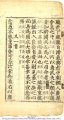
Binding: Akka, Israel, 1889, dark blue leather gilt with flap, sewn on 3 cords.
Provenance: 1. ‘Abd al-Baha ibn Baha’ Allah, Akka and Haifa (1889-1921); 2.’Abd al-Baha’ Isma’il ibn ‘Ali al-Salamuni al-Hamawi,Salamiyyah, Syria ; 3. Sam Fogg, London
Commentary: According to Baha’i teachings, religious history is seen as an ongoing educational process for mankind, through God’s messengers or divine educators. Baha’ Allah is seen as the most recent, but not the last of these, prophesied in Hinduism, Buddhism, Judaism, Christianity, Islam and other religions. Due to the oneness of the entire human race, he attempted to reconcile the monotheistic religions in one new faith and establish worldwide lasting peace. There are some 6 million Baha’i’s worldwide, and the central Baha’i scriptures, Kitab-i-Aqdas and Kitab-i-Iqan, are translated into 800 languages.
The famous text about Saladin’s re-conquest of Jerusalem from the Crusaders in 1193 is significant, as Abd al-Baha tried to assemble a reference library covering the wars between Christianity and Islam: Islam’s conquest of Syria, Turkey and Palestine, followed by Islam’s conquest of Egypt, North Africa, and Spain, then the Crusades, Saladin’s re-conquest of Palestine, Christianity’s re-conquest of Spain, and the Ottoman conquest of Eastern Europe, and its re-conquest. This reference library was assembled in Baha’i’s quest to establish a permanent and universal peace as the supreme goal of all mankind.
Colophon: “It (the book) was copied for his own use by ‘Abd al-Baha’ ibn Baha’ Allah Husain ‘Ali Nuri in his home town of Akka on the Palestinian coast over a period of numerous days, the last of which was 10 Muharran 1307 AH (Friday 6 September 1889 AD)”. He was the son of the founder of the Baha’i religion and its future leader. His father, Baha’ Allah, had proclaimed himself the universal Messiah, whose coming had been preached by Sayyid ‘Ali Muhammad Shirazi, known as the “Bab”.