top
| MS 2861 | |
THE JUDGES DEAD SEA SCROLL BIBLE: JUDGES 4:5 - 6 |
|
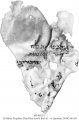
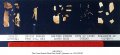
MS iin Hebrew on brown leather, Qumran, ca. 80-30 BC, 1 fragment from a
scroll, 3,0x8,5 cm remaining, part of 1 column, (3,0x8,5 cm), 4 lines in a
good Herodian Hebrew book script. Context: Judges is only represented on fragments from the 3 Dead Sea Scrolls 1QJudg in Paris: Bibliothèque Nationale, and 4QJudga+b, in Jerusalem: Rockefeller Museum. |
![]() |
Provenance: 1. Community of the Essenes, Qumran (2nd half of 1st c. BC-68 AD); 2. Qumran Cave 4 (68-1952); 3. Khalil Iskander Shahin ("Kando"), Bethlehem (1952-1956); 4. Private collection, Switzerland (1956-1995). Commentary: The earliest witness to this part of the Bible. The oldest biblical manuscript in private ownership. Preliminary description based on information from Dr. James H. Charlesworth, who will publish the MS in the DJD series and in the Princeton Theological Seminary Dead Sea Scrolls Project. See also MS 4611, The Leviticus Dead Sea Scroll, Qumran, 30 BC - 68 AD |
![]() |
top
| MS 4612/1 | |
| 12 MINOR PROPHETS DEAD SEA SCROLL BIBLE: JOEL 4:1 - 4 |
![]() |
MS in Hebrew on dark brown leather, Qumran, 30 BC-68
AD, fragment of a scroll, 10x7 cm, part of 1 column, (6,5x5,4 cm), 8 lines in
a fine regular Herodian Hebrew book script, upper edge preserved 3,6 cm. Provenance: 1. Community of the Essenes, Qumran (30 BC-68 AD); 2. Qumran Cave 4 (68-1952); 3. Khalil Iskander Shahin ("Kando"), Bethlehem (1952-1956); 4. Private collection, Switzerland (1956-1995). Commentary: This is a unique, new scroll, not belonging to any other Joel scrolls. The text is wholly or partly preserved on the following Dead Sea Scrolls: Joel 4:1 - 16: MurXII (DJD II:88) undated, Joel 4:4 - 9: 4QXIIg (DJD XV:82), 30-1 BC, Joel 4:1 - 2: Septuagint 8HevXIIgr (DJD VIII) late 1st c. BC. The present Joel 4:3 will be the 2nd earliest witness to the text if MurXII has an earlier date, but will be the earliest witness, if MurXII has a later date. The leather is so darkened that the text can only be read via infrared photography. |
|
See also MS 2713, The Joshua Dead Sea Scroll, Qumran, late 1st c. BC - early 1st AD See also MS 1926/4, The Daniel B Dead Sea Scroll, Qumran, 4 BC-68 AD |
|
top
top
top
See also MS 1909, Manual of Discipline, Dead Sea Scroll, Qumran, 1st c. BC
| MS 5095/1 | |
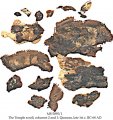
THE TEMPLE SCROLL, COLUMNS 2 AND 3 |
![]() |
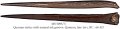
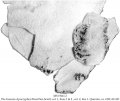
MS in Hebrew on vellum, Qumran, late 1st c. BC - 68 AD, 12 fragments, 5,5x2,9 cm, 3,8x2,0 cm, 4,3x1,3 cm and smaller, part of columns 2 and 3, parts of up to 4 lines each on 2 or more layers sticking together, in a developed formal Herodian Hebrew book script by scribe A, from a scroll of 67 columns, 19 membranes, total length 9 m., Linen cloth from the wrapper sticking to most of the fragments. A piece of linen from the wrapper, 1,2x2,0 cm. 3 fragments with modern thick paper sticking. Context: The Temple Scroll, with the fragments MSS 5095/1 and 5095/4, the scroll's linen wrapper MS 5095/2, and a palm leaf pen, MS 5095/3, were found together in a large jar with lid (still in Kando's shop in Jerusalem), in Cave 11 in 1956. The Temple Scroll is now in Shrine of the Book, Israel Museum. | |
|
Provenance: 1. Community of the Essenes, Qumran (early 1st c. - 68 AD); 2. Qumran Cave 11 (68-1956); 3. Bedouins of the Ta'amireh tribe, Judaean desert (1956); 4. Khalil Iskander Shahin ("Kando"), Bethlehem (1956-1961); 5. Private collection, Switzerland (gift from Kando) (1961-1980) and heirs. Commentary: The Temple Scroll is the longest of the Dead Sea Scrolls, with its 9 m. The text was originally written ca. 150 BC, and purports to be the second Torah of the Community of Essenes, giving particularly attention to the way the Temple is to be reconstructed. The purpose of the scroll is to be a New Deuteronomy, a law for the remnant of Israel in the future. With the Manual of Discipline, the most important of the sectarian Dead Sea Scrolls. |
![]() |
top
top
top
| MS 5095/2 | ![]() |
THE TEMPLE SCROLL WRAPPER |
|
Linen cloth, Qumran, late 1st c. BC - 68 AD, ca. 45x60 cm, the upper edge lacking, in a fine weave of 12x12 S-spun threads pr square cm, the warp and weft of fairly same thickness, the lower edge with border of 2 pairs of thicker parallel threads, 2 cm apart; with stains from the scroll, some tiny black gelatinised vellum fragments stitching. The cord to fasten the wrapper around the scroll, 85 cm long, made from 3 linen threads. |
|
|
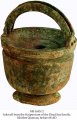
Context: The Temple Scroll, with the 12 fragments MS 5095/1, the scroll's linen wrapper MS 5095/2, and a palm leaf pen, MS 5095/3, were found together in a large jar with lid (still in Kando's shop in Jerusalem), in Cave 11 in 1956. The Temple Scroll is now in Shrine of the Book, Israel Museum. Smaller parts of the wrapper still stick to MS 5095/1. For similar wrappers from Cave 1, see DJD vol. I, Oxford 1955, G.M. Crowfoot: The linen textiles. Provenance: 1. Community of the Essenes, Qumran (early 1st c. - 68 AD); 2. Qumran Cave 11 (68-1956); 3. Bedouins of the Ta'amireh tribe, Judaean desert (1956); 4. Khalil Iskander Shahin ("Kando"), Bethlehem (1956-1961); 5. Private collection, Switzerland (gift from Kando) (1961-1980) and heirs. Commentary: The Temple Scroll is the longest of the Dead Sea Scrolls, with its 9 m. The text was originally written ca. 150 BC, and purports to be the second Torah of the Community of Essenes, giving particularly attention to the way the Temple is to be reconstructed. The purpose of the scroll is to be a New Deuteronomy, a law for the remnant of Israel in the future. With the Manual of Discipline, the most important of the sectarian Dead Sea Scrolls. The common way of keeping books, i.e. scrolls, in the ancient period, was to wrap them up or put them in cases, sometimes both, and then put them in a cupboard. In the later synagogues this cupboard was generally referred to as the Ark of the Law. Representation of it, with the doors open and the ends of the scrolls showing, are seen on Jewish gilt glass vessels found in the catacombs in Roma. To the present day, the Torah is a scroll with a scroll wrapper. |
|
top
top