logo homecontents

20. China

Click on the pictures to view them in full screen format

This collection with 258 items is duly presented in the introduction. 11 MSS are listed here. 145 items out of 150 in collection 21. Pre-Gutenberg printing, are also from China.


See also MS 3024/2, Funeral urn, Ganshu, China, ca. 2200-1800 BC


MS 2103/2

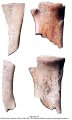
ORACLE BONE: CRACKING MADE ON THE XINHAI (DAY 48); NO QUICK VICTORY ON THE YIN (DAY 51?). APPROVED. IT WILL RAIN ON JIAHAI (?)

ms2103

MS in Chinese on oxen scapula bone, Xiaotun, China, 14th-12th c. BC, 1 bone, 13x7 cm, (11x4 cm), 4+2 lines in Chinese script, prepared and cracked with burned marks on reverse.

Binding: Barking, Essex, 1996, green cloth gilt folding case, by Aquarius. Context: Around 100,000 oracle bones are known, widely scattered in museums and collections around the world. 7 of these are in The Schøyen Collection.

Provenance: 1. Royal archive of oracular records, Late Shang Dynasty of Anyang (14th-12th c. BC -); 2. Excavated in Xiaotun (ca. 1945); 3. Philosophical Research Society library, Los Angeles, 5/858 (-1995); 4. Sam Fogg Rare Books Ltd., London.

Commentary: Nearly all known Chinese oracle bones derive from Xiaotun near the ancient capital of the Late Shang Dynasty of Anyang. The oracular use of the bones involved the interpretation of pattern of cracks which appeared on the bones after subjection to heat by the application of a heated metal rod. The text records the interpretation of the oracle and the date of its production. The oracle bones are so far the first preserved evidence of Chinese script in complete meaningful sentences.


MS 4579/2

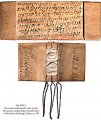
DOCUMENT ADDRESSED TO THE MONK, SRONASENA, CONCERNING A FEMALE SLAVE OF HIS SISTER, RAMASRIA FROM THE CATISA DEVI ESTATE; REQUESTING THE SLAVE, NAMED SACGIA, TO BE SENT TO WORK ON THE CATISA ESTATE, THE PAYMENT FOR HER SERVICES WILL BE A FOUR-YEAR OLD CAMEL, GIVEN BY RAMASRIA TO SRONASENA. WITNESSED AND DATED TO YEAR 2 OF KING VISMANA, BY THE SCRIBE NANDASENA, WITH THE SEALS OF THE OGU (ADMINISTRATIVE OFFICER), PIDEYALYA AND THE COZBO (FUNCTIONARY), PUNASENA

ms4579/2

MS in Gandhari language (Kroraina prakrit) on wood, Niya, Sinkiang, China, ca. 315, 1 rectangular double tablet (kilamudra), 10x27x2 cm, (10x18 cm), 7 long lines and 3+1+1 lines in Karosthi documentary script, and central cover 10x18x1,5 cm with 2 oval seal impressions, 2,0x1,5 cm, set in a rectangular clay section, 1 seal with a king's head right, the other with Pegasus right, secured with 3 double cords. '

Provenance: 1. Spink, London (1999); 2. Sam Fogg Ltd., London.

Commentary: The Gandhara language is a Prakrit or vernacular version of Indo-Aryan, which developed parallel to Sanskrit. It is thought to have been a very conservative language, preserving many of the features found in Vedic or Sanskrit but lost in other Prakrits. At this time it was written in Karosthi characters, an adaptation of Iranian Pehlevi script which was used throughout the Persian Empire. Karosthi is written from right to left. Buddhist merchants and missionaries spread the use of Gandhara language and Karosthi script into Central Asia and Chinese Turkestan (Sinkiang) where it was used for business, administration and religious purposes alongside Pehlevi, Bactrian, Khotanese and Chinese.
The present MS is very much part of the culture as the 700 texts collected from Niya at the beginning of the 20th c. by Sir Aurel Stein. (Karosthi Inscriptions Discovered by Sir Aurel Stein in Chinese Turkestan, Part I-III; ed. Boyer, Rapson & Senart. Oxford 1920-1929.)


MS 2152

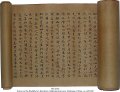
SUTRA ON THE BUDDHA'S LIBERATION, MAHAPARINIRVANA, BOOK 4, CH. 7-8

ms2152

MS in Chinese on undyed paper, Sinkiang, China, ca. 625-650, 1 scroll of 5 sheets (complete), 25x258 cm, 161 columns, each column: (20,0x1,5 cm), 16-18 characters in a neat kaishu calligraphy of Chinese book script by the workshop of the Tang imperial MSS.

Binding: London, 1996, black cloth gilt case by Ruth Kirkby.

Context: The Dunhuang hoard consisted of about 13,500 MSS; with printing and fragments included, 19,200 items. It is the largest and most important group of oriental MSS ever found. The present distribution is as follows: London, British Library, Stein collection 8080; Bejing, National Library 8000; Paris, Bibliothèque Nationale, Pelliot Collection ca. 3000; Shanghai Library 100; Shanghai Museum 4; Japan, museums and libraries 5; and The Schøyen Collection 4.

Provenance: 1. Dunhuang cave 17, Gansu, China, (ca. 9th c. - ca. 1900); 2. Wang Yuanlu, Taoist priest and guardian, Dunhuang (ca. 1900); 3. Convent (house) of Jichuan; 4. Sam Fogg Rare Books Ltd., London.

Commentary: The famous Mogao caves, over 1000 in number, located near the oasis town of Dunhuang on the Silk Road in Central Asia, were used as library repositories for a wide range of literary MSS for conservation purposes, ca. 500-1000 AD by the Tibetan and Chinese occupants of the town. The caves were sealed at the beginning of the 11th c., and left undisturbed for almost 900 years.
One of the oldest witnesses to the Chinese translation. The oldest complete Chinese MS in private hands.


MS 2169

MAHAPRAJNAPARAMITA UPADESA; COMMENTARY ON THE GREATER PERFECTION OF WISDOM ATTRIBUTED TO NAGARJUNA. TRANSLATED BY KUMARAJIVA

ms2169

MS in Chinese on blue coloured paper, China, 620-756, 1 f. from a scroll, 23x32 cm, 16 columns, (19x32 cm), of 15 characters per column in Chinese book script in gold, on paper died blue and ruled in silver.

Context: 2 other parts from the same scroll are in public institutions.

Provenance: 1. Excavated in Xiaotun (ca. 1945); 2. Philosophical Research Society library, Los Angeles (-1995); 3. Sam Fogg Rare Books Ltd., London.

Commentary: The text is attributed to the Indian philosopher Nagarjuna, translated from Sanskrit to Chinese by Kumarajiva, an Indian or Central Asian Buddhist missionary who settled in China in the 5th c. This is part of a luxury MS using gold ink on blue stained paper, also used in Europe from 4th c. to the Carolingian period, with gold script on purple or blue stained vellum, used for princely commissions.


MS 2414

SUTRA OF THE EXTREME GOLDEN RADIANCE, CH. 28-31; JIN GUANG MING ZUI SHENG WANG JING. TRANSLATED BY THE MONK YIJING

ms2414

MS in Chinese on paper, Dunhuang, Xinjiang (Sinkiang), China, 9th-early 10th c., 1 scroll of 5 sheets (complete), 27x232 cm, 28 columns, 17 (prose) and 14 or 20 (verse) characters in Chinese book script, 2 seals stamped 8 times.

Provenance:1. Dunhuang caves, Gansu, China, (ca. 10th c. - ca. 1900); 2. Wang Yuanlu, Taoist priest and guardian, Dunhuang (ca. 1900); 3. Berthold Laufer, Chicago (ca. 1900-); 4. Newberry Library, Chicago (-1994); 5. Sam Fogg Rare Books Ltd., London.

Commentary: This scroll is unusual among the Dunhuang scrolls in bearing a profusion of impressions of a number of seals. The larger seal reads "a secret talisman ordered by the divine lady to put a spell on the evil spirit". The cipher on the right and the terminology identify this as a Daoist seal. The location of these seals over the joins shows that the scroll formed a unit at the time. The smaller seal, which has been stamped twice, reads "The seal of the great law bureau of the precious altar of the enlightened emperor", suggesting that it is the seal of an institute of government, whose work is likely to have been concerned with the performance of meritorious acts, rituals and prayers for the safety of the state. Being 76x75 mm and 85x83 mm, the seals are larger than those in use by private individuals.

The main purpose of this Buddhist Sutra is to protect the country, while the purpose of the Daoist seals is the same. This religious syncretism can be explained by the political uncertainty prevailing in Sinkiang at the time. The specific commissioners of the production of such MSS for this purpose could have been Zhang Yichao, a local magnate who expelled the Tibetans from the area in 847, and ruled for nearly all of the 2nd half of the 9th c., or the Cao family who were established as Chinese Imperial Commissioners in the 10th and 11th centuries.


MS 2153

SUTRA ON THE NAMES OF THE BUDDHA, BUDDHANAMA SUTRA, FO MING JING, CH. 10 OF A 30-CHAPTER APOCRYPHAL SUTRA, COMPRISING THE 7,712TH TO THE 8,600TH NAME OF THE BUDDHA

ms2153

MS in Chinese on paper, Sinkiang, China, ca. 920, 1 scroll of 33 sheets (complete), 32x1511 cm, 627 columns, (each sheet: 19 columns, up to 26,7x2,4 cm), 6-7 or 17-21 characters per column, in a large strong kaishu calligraphy of Chinese book script, 11 miniatures of seated Buddhas, ca. 3,5 cm high, in colours.

Context: The Dunhuang hoard consisted of about 13,500 MSS; with printing and fragments included, 19,200 items. It is the largest and most important group of oriental MSS ever found. The present distribution is as follows: London, British Library, Stein collection 8080; Bejing, National Library 8000; Paris, Bibliothèque Nationale, Pelliot Collection ca. 3000; Shanghai Library 100; Shanghai Museum 4; Japan, museums and libraries 5; and The Schøyen Collection 4.

Provenance: 1. Dunhuang cave 17, Gansu, China, (ca. 10th c. - ca. 1900); 2. Wang Yuanlu, Taoist priest and guardian, Dunhuang (ca. 1900); 3. Sam Fogg Rare Books Ltd., London.

Commentary: The famous Mogao caves, over 1000 in number, located near the oasis town of Dunhuang on the Silk Road in Central Asia, were used as library repositories for a wide range of literary MSS for conservation purposes in the period ca. 500-1000 AD by the Tibetan and Chinese occupants of the town. The caves were sealed at the beginning of the 11th c., and left undisturbed for almost 900 years.
The text has been recorded and listed in Tang library catalogues but was lost; the present MS is the only surviving witness.


MS 2457/1

ms2457/1
  1. SUTRA OF PERFECT ENLIGHTENMENT; DAFANGGUANG YANJUE XIUDUOLUO LIAOYI JING. BELIEVED TRANSLATED BY THE INDIAN MONK, BUDDHATRATA
  2. PEI XIU, TANG DYNASTY MINISTER: PREFACE
  3. ZONG MI, CHAN PATRIARCH: PREFACE

MS in Chinese on dark blue paper, China, late 14th c., 174 ff. (complete), 32x11 cm, 5 columns 25x10 cm), 17 characters in Chinese book script in gold ink, 6 ff. miniatures in gold and white, with frontispiece depicting the Historical Buddha, Sakyamuni seated on a throne surrounded by 9 disciples and 5 Bodhisattvas on each side.

Binding: China, 19th c., boards in old style, concertina-folded format (Jingzhe zhuang). Context: Companion volume to MS 2457/2.

Context: Companion volume to MS 2457/2.

Provenance: 1. Philosophical Research Society library, Los Angeles (-1995); 2. Sam Fogg cat. 19(1998):9.

Commentary: Recently some Japanese scholars have suggested that this sutra may have been created in China.


MS 2457/2

ms2457_2
1. PUMEN PING; AVALOKITESVARA SUTRA
2. DIAMOND SUTRA; JINGGANG BORE BOLUOMI JING; VAJRACCHEDIKA-PRANA-PARAMITA
3. FOSHUO OMITTUO JING; AMITABHA SUTRA
4. SUTRA OF THE NAMES OF THE THIRTY BUDDHAS; FOSHUO SANSHIWU FOMING JING

MS in Chinese on indigo stained paper, China, 15th and 16th c., 158 ff. (complete), 32x11 cm, 5 columns (21x10 cm), 15 characters in Chinese book script in gold ink.

Binding: China, 19th c., bluish pattern brocade on boards, concertina-folded format (Jingzhe zhuang).

Context: Companion volume to MS 2457/1.

Provenance: 1. Philosophical Research Society library, Los Angeles (ca. 1945-1995); 3. Sam Fogg cat. 19(1998):12.


MS 2459

1. REPORT OF A MONSTER SENT TO THE EMPEROR FROM E WEI, GOVERNOR OF SICHUAN PROVINCE
2. NARRATIVE BY MARTINO MARTINI (MARTIGNY) CONFIRMING THE REPORT
ms2459

MS in Chinese and Italian (text 2) on paper, Sichuan province, China, 1643-1661, 1+1 ff., 27x31 cm, 8 columns, 23-27 characters in Chinese script, full-page drawing of the monster; text 2: 7x6 cm, single column, 11 lines in a small cursive Italian script.

ms2459b

Provenance: 1. E Wei, Governor of Sichuan Province, China (mid 17th c.); 1. Martino Martini, China (mid 17th c.); 2. Office of Cardinal Tournon, Catholic Patriarch of Antioch, (ca. 1710); 3. Auction, Germany (ca. 1994); 4. Sam Fogg cat. 19(1998):51.

Commentary: From the report: Several soldiers, including Ding Wanghu, discovered in Guo Duoli a beast with a human body, but no head, and instead a hand growing from his neck. It has eyes on its belly and a mouth on its belly bottom. This beast came to the army camp and ate rice, but caused no harm to any people or animals. --- Later the soldiers chased him to a place called La Ha Huo. There, in the valley, there were many deep caves, and the beast jumped into one of them, where the soldiers discovered hundreds of these beasts ---. The Jesuit Martino Martini (b. 1614), lived in China 1643-1661. He was a geographer, and prepared the first modern atlas of China.


MS 4458/1

LEGENDS AND RELIGIOUS MYTHS

ms4458_1

MS in Naxi on thick brown paper, Yunnan, China, 18th c., 10 ff. (complete), 10x28 cm, single column, (10x28 cm), 4 lines in Naxi pictographic script in compartments.
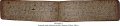
Binding: Yunnan, China, 18th c., paper cover, stitched (Xian zhuang) on 3 sewing stations, title with double borders across upper cover.

Provenance: 1. Private collection, Lijiang, Yunnan, China (-2000); 2. Bruce Ferrini, Akron Ohio.

Commentary: The Naxi people lives in Yunnan province, China. Their language is rather closely related to Yi. Thus it falls inside the Loloish branch of Tibeto-Burman. Unlike Yi, the Naxi writing is pictographic, with no relation to Chinese.


MS 2473/1

ORIGIN MYTH OF THE YAO NATION; THE DOCUMENT OF PINHUANG

ms2473_1

MS in Yao on paper, Guangdong-Jiangxi, South-West China, 19th c., 1 roll (complete), 25x565 cm, 2 horizontal columns, (23x554 cm), 6 characters per column in Chinese book script, 32 miniatures in ink and red and blue-green wash, 3 decorative strips throughout along margins and centre. Binding: England, 20th c., red cloth folding case.

Context: For another version of the Yao origin myth, see MS 2473/2.

Provenance: 1. Sam Fogg cat. 19(1998):67.

Commentary: According to the last part of the MS, the Yao people do not have to provide compulsory labour service for the Chinese authorities, and they have the right to govern their own lands.


Top      Next collection