<< top of current collection| 2 >>

<< previous page | next page >>

1: THE BIBLE

1.1 HEBREW & ARAMAIC BIBLE

1.2 GREEK NEW TESTAMENT & SEPTUAGINT

MS 2649 Egypt, ca. 200
MS 2648 Egypt, ca. 200
MS 113 Egypt, 3rd c.
MS 187 Egypt, mid 4th c.,
MS 675 Sicily, 10th c.
MS 1982 Constantinople, 11th c.
MS 231 Cyprus, 1156, and 16th c.
MS 230 Byzantine Empire, 12th c
MS 2932 Greece, ca. 1300

1.3 COPTIC BIBLE

1.4 LATIN BIBLE

1.5 OTHER BIBLE TRANSLATIONS

1. The Bible

1.2. Greek New Testament & Septuagint

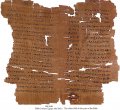
MS 2649  
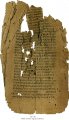
BIBLE: LEVITICUS 10:15 - 11:3; 11:12 - 47; 12:8 - 13:6; 23:20 - 30; 25:30 - 40 MS 2649

MS in Greek on papyrus, Oxyrhynchus?, Egypt, ca. 200, 8 f f. (originally ca. 74 ff.), 20x10 cm, single column, (16x8 cm), 22-23 lines in Greek semi-cursive book script.

Context: Possibly by the same scribe as MS 2648. The 8 ff. were found tipped in between the leaves of MS 2650. The whole codex with the 27 chapters of Leviticus would have had about 74 ff. Probably from the same hoard as the Chester Beatty papyri, now in Dublin: Chester Beatty Library.

Provenance: 1. Monastery in the Oxyrhynchus region, Egypt (ca. 4th c. -); 2. Antiquity dealer, Alexandria (ca. 1930); 3. Private collector, Zürich.

Commentary: Together with the very fragmentary P. Heidelberg 945 Lev. 19:16-19, 31-33 (3rd c.), and the Dead Sea Scroll 4Q LXX Lev a+b (1st c. BC-1st c. AD), the present MS is the oldest Septuagint Leviticus extant. The greater part of the present papyrus is not represented on any Dead Sea Scroll, thus this is the oldest MS of this part of the Bible

Published: Kristin De Troyer: Report on the Leviticus Codex; in: The Folio, Bulletin of the Ancient Biblical Manuscript Center, vol. 23 (2006), pp. 3-7.

To be published by Rosario Pintaudi and Kristin De Troyer in the series "Manuscripts in The Schøyen Collection", Greek Papyri, vol. 2.

Exhibited: NorFa - Nordic network in Qumran studies. Symposium in Oslo 3-5. June 2004.

back to top top
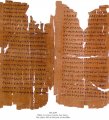
MS 2648  
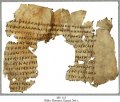
BIBLE: JOSHUA 9:27 - 11:3 MS 2648

MS in Greek on papyrus, Oxyrhynchus?, Egypt, ca. 200, 6 ff. (originally ca. 60 ff.), 20x11 cm, single column, (16x8-9 cm), 19-23 lines in Greek semi-cursive book script.

Context: Possibly by the same scribe as MS 2649. The 6 ff. were found tipped in between the leaves of MS 2650. The whole codex with the 24 chapters of Joshua would have had approximately 60 ff.

Probably from the same hoard as the Chester Beatty papyri, now in Dublin: Chester Beatty Library.

Provenance: 1. Monastery in the Oxyrhynchus region, Egypt (ca. 4th c.); 2. Antiquity dealer, Alexandria (ca. 1930); 3. Private collector, Zürich.

Commentary: The oldest Septuagint Joshua extant. Apart from Joshua 10:2-5, 8-11, which is on the Dead Sea Scroll 4QJosha, in Hebrew from ca. 100 BC, the present papyrus is the oldest MS of this part of the Bible.

The text is the Septuagint before the critical work of Origenes Hexapta. It is closer to the original Septuagint of the 3rd c. BC than any other MSS. But it also revises the Septuagint towards the Hebrew Masoretic text, and at the same time reflects a different Hebrew recension from before the Masoretic revisions.

Published: Papyrologica Florentina, vol. XXXV. Rosario Pintaudi: Papyri Graecae Schøyen (PSchøyen I). Firenze, Edizioni Gonnelli, 2005 (Manuscripts in The Schøyen Collection V: Greek papyri, vol. I), pp. 81-145, by Kristin de Troyer.

Exhibited: NorFa - Nordic network in Qumran studies. Symposium in Oslo 3-5. June 2004.

back to top top
MS 113  
BIBLE: ROMANS 4:23 - 5:3; 5:8 - 13

MS in Greek on vellum, Fustât?, Egypt, 3rd c., 1 partial f., 9x11 cm, originally ca. 15x13 cm, single column, (7x9 cm, originally ca. 12x9 cm), part of 14 lines originally 24 lines in a small late classical Greek uncial without word division.

Binding: Barking, Essex, 1989, red morocco gilt folding case by Aquarius.

Provenance: 1. Christian Community at Fustât; 2. Dr. Leland C. Wyman, Boston, Massachusetts (from 1950); 3. John Rocks, Boston, Massachusetts (until 1988); 4. Sotheby's 21.6.1988:47.

Commentary: Earliest witness to this text. Aland uncial 0220, which is listed as the second oldest vellum MS of the New Testament. Textually Aland lists it in the highest class "Category I Strict text", which contains a few MSS only of a very special quality, transmitting the text of the exemplar with meticulous care. These MSS represent the most direct uncorrupted line to the original text extant.

Published: Papyrologica Florentina, vol. XXXV. Rosario Pintaudi: Papyri Graecae Schøyen. Firenze, Edizioni Gonnelli, 2005 (Manuscripts in The Schøyen Collection V: Greek papyri, vol. I), pp. 65-71.

W.P. Hatch: A Recenly DIscovered Fragment of the Epistle to the Romans. Harvard Theological Review XLV, 1952, pp. 81-85.

K. Aland: Kurzgefasste Liste der Griechischen Handscriften des Neuen Testaments, I, 1963, p. 55, listing present MS as no 220.

B.M. Metzger: The Text of the New Testament, Its Transmission, Corruption, and Restoration. 2. ed. Oxford, Claredon Press, 1968, p. 61.

Exhibited: 1. Conference of European National Librarians, Oslo. Sept. 1994; 2. NorFa - Nordic network in Qumran studies. Symposium in Oslo 3-5. June 2004..

back to top top
MS 187  
BIBLE: EXODUS 4:17 - 6:12; 7:12 - 21 MS 187

MS in Greek on papyrus, Egypt, mid 4th c., 5 ff., 26x16 cm, originally 28x16 cm, single column, (22x12 cm), 32 lines in an expert Greek uncial.

Context: 1 f. with Exodus 6:28 - 7:12 in Antonovich Collection, Paris.

Provenance: 1. François Antonovich, Paris (1981-1988); 2. Bruce Ferrini, Akron, Ohio.

Commentary: From a very early Exodus papyrus codex that originally contained 4 quires of 11 bifolia each, in all 88 ff. A doubled sewing chord with remains of brown leather reinforcement is preserved in the bifolium. There are relatively few papyri of Exodus in Greek, and the present MS is the most substantial one. The texts preserved here are not otherwise extant on papyrus. Together with Codex Vaticanus the oldest Septuagint Exodus.

The present shows a very suggestive state of the Greek Septuagint text before the critical work of Origenes, i.e. a preorigenian but already partly hebraised text. Rahlfs no. 866.

Published: To be published by Olivier Munnich and Rosario Pintaudi in the series “Manuscripts in The Schøyen Collection”, Greek Papyri, vol. 2.

Exhibited: XVI Congress of the International Organization for the study of the Old Testament. Faculty of Law Library, University of Oslo, 29 July - 7 August 1998.

back to top top
MS 675  

THE CHARLES OF ANJOU GOSPELS

BIBLE: GOSPELS WITH LECTIONS, SYNAXARION, LETTER OF EUSEBIUS TO CARPIANUS, CANON TABLES AND KEPHALAIA

MS 675

MS in Greek on vellum, Sicily, Italy, 10th c., 285 ff. (-17), 15x11 cm, single column, (9x7 cm), 20 lines in Greek minuscule, headings and 9 full pages in red uncials, 7 full-page decorated canon tables, painted initials with zoomorphic ornament throughout, 9 miniature roundels, 8 of them with portrait of Christ, 2 drawings of animals. Binding: Sicily, Italy, 15th c., blindstamped leather over boards, chain stitches on 3 sewing stations, spine raised "alla Grecca".

Provenance: 1. Charles of Anjou, King of Naples and Sicily (1273); 2. Bishop Gregor, Myriophyton, Merefte, Turkey; 3. Sotheby's 19.6.1990:79. Commentary: Aland 1421, text category 5 (Byzantine recension), with corrections from a better text.

Exhibited: 1. Charles of Anjou, King of Naples and Sicily (1273); 2. Bishop Gregor, Myriophyton, Merefte, Turkey; 3. Sotheby's 19.6.1990:79. Commentary: Aland 1421, text category 5 (Byzantine recension), with corrections from a better text.

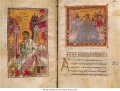
MS 675 - 2 MS 675 - 3
back to top top
MS 1982  

THE AGIA SOFIA LECTIONARY

  1. BIBLE: GOSPEL LECTIONARY
  2. LIST OF CEREMONIES IN THE GREAT CHURCH, AGIA SOFIA, CONSTANTINOPLE
MS 1982

MS in Greek on vellum and paper, Constantinople, Turkey, 11th c. with additions ca. 1400, & 16th c., 277+49 ff. (-19), 33x26 cm, 2 columns, (22x16 cm), 23 lines in a fine flowing Greek minuscule, and clubbing Greek uncial, 1/4 of the 2nd half of the MS in gold script, ecphonetic notation in red, heading and small initials in gold over red, large decorated initials in gold, red, blue and green, up to half-page headpieces, 3 decorated in gold and colours, the ca. 1400 additions by the scribe Ioasaph, 16th c. full-page miniature of St. Matthew.

Binding: Constantinople, 16th c., green and gilt damask with floral decoration over light wooden boards, chain stitches on 5 sewing stations, spine raised "alla Grecca".

Provenance: 1. Agia Sofia, Constantinople (11th c. - ca. 1400); 2. Monastery of the Theotokos, Constantinople (ca. 1400-); 3. Papas Andreas (1849-1858); 4. Sam Fogg, London. Deaccession December 2010.

Commentary: Over one quarter of the second half of the MS is entirely written in gold. The ecphonetic notation was partly a forerunner to the neumes. Aland l. 2404, text category 5 (Byzantine recension).

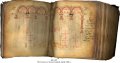
MS 1982 - 2 MS 1982 bindings
back to top top
MS 231  
  1. BIBLE: GOSPELS WITH KEPHALAIA
  2. MANUEL HAGIOSTEPHANITES: POEM IN HONOUR OF ARCHBISHOP JOHN OF CRETE
  3. BIBLE: GOSPEL READINGS FOR MAUNDY THURSDAY AND GOOD FRIDAY

MS in Greek on vellum and paper, Cyprus, 1156, and 16th c. (text 3), 342 ff. (complete), 11 ff. paper (text 3), 23x17 cm, single column, (16x10 cm), 20 lines and 31 lines (text 3) in Greek minuscule by Manuel Hagiostephanites, scribe of Vatican Gospel Cod. Barb. gr. 449, in black and crimson, 4 pp. in crimson overlaid with gold, pericopes in gold, headings in display capitals in crimson and gold, small illuminated initials throughout, 3 large decorated and 1 historiated illuminated initials by Manuel Hagiostephanites. 4 half-page and 4 full-page miniatures of the Nicean school, very close to the St. Petersburg Gospels, Petropolitanus 105.
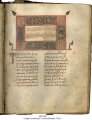
Binding: Greece, 16th c., calf over wooden boards, sewn on 4 cords. Traces of 4 round corner pieces and a large central cross.

Provenance: 1. Monastery, Cyprus (from 1156); 2. Monastery of Hagias, Andros, Greece, "Hagias 32" (before 1748 -after 1897); 3. Louis Birkigt Collection (until 1967); 4. André Cottet, Genève 10.11.1967:2; 5. H.P. Kraus cat. 159(1981). Deaccession May 2010.

Commentary: The earliest dated MS so far of the hitherto little known, but important, Nicean school of illumination is from 1269. This MS dated 1156 will necessitate a complete re-evaluation of the scholarship. The signed and dated colophon over 2 pp. includes a most unusual poem (text 2) dedicated to John of Crete, archbishop of Cyprus, and a well known author. Aland 1361 and l. 2383, text category 5 (Byzantine recension).

MS 231 - 1
 MS 2231 - 2

Exhibited: 1. Conference of European National Librarians, Oslo. Sept. 1994; 2. NorFa - Nordic network in Qumran studies. Symposium in Oslo 3-5. June 2004.

back to top top  
MS 230  

THE USSHER GOSPELS

BIBLE: GOSPELS WITH KEPHALAIA, EUSEBIUS' LETTER, CANON TABLES, SYNAXARION, CAPITULA AND HYPOTHESIS

MS in Greek on vellum, Byzantine Empire, 12th c., 2 vols., 209 + 234 ff. (complete), 12x9 cm, single column, (8x5 cm), 18 lines in a small, regular Greek minuscule with a few uncial forms, some sidenotes in red, rubrics and some capitals in gold, decorated headpieces in gold at beginning of each Gospel, 14 full-page illuminated canon tables.

Binding: England, 18th c., dark red morocco, sewn on 3 cords, decorative gilt borders, spines richly gold-tooled, red patterned endleaves, with Trinity College, Dublin's shelfmark "F.1".

MS 231 - 1

Provenance: 1. Thomas Goade (1576-1638); 2. James Ussher, Archbishop of Armagh, Ireland (1581-1656); 3. Elizabeth, daughter of Ussher, wife of Sir Timothy Tyrrell (1656-1657); 4. Trinity College, Dublin, "F.1" (1661-1702); 5. Sir Richard Bulkeley (1644-1710); 6. John Jones; 7. James Verschoyle, Bishop of Killala (1793-1834); 8. 1st Earl of Moira (d. 1793); 9. Francis Rawdon Hastings, 2nd Earl of Moira, 1st Marquess of Hastings (1754-1826); 10. The Hastings family until the death of the 4th Marquess (1868); 11. Philips, Nottingham, 29 Dec. 1868; 12. John Crichton-Stuart, 3rd Marquess of Bute, son of Lady Sophia Hastings, MS. 82 (1868-1900.); 13. The Marquesses of Bute (1900-); 14. Sotheby's 13.6.1983:1; 15. H.P. Kraus, New York.

Commentary: Archbishop James Ussher (1581-1656) was Primate of the Church of Ireland, and owner of ca. 700 Biblical MSS. Other collectors, including Cardinal Mazarin and King Frederich III of Denmark, made attempts to acquire the library after his death. The collection reached Trinity College through the intervention of Oliver Cromwell and his son Henry. Sir Richard Bulkely, Fellow of the College, borrowed the MS from Trinity College, and died in 1710 without having returned it. A notable feature of this MS is the small size, as most Greek Gospels are great quartos. Only ca. 40 of ca. 2600 Greek New Testaments recorded by Aland are as small as the present MS. Diminutive books were for private devotional use. - Aland 64, text category 5 (Byzantine recension).

Exhibited: Oslo Katedralskole 850 år, Jubileumsutstilling 10. - 14. March 2003.

back to top top  
MS 2932  

BIBLE: NEW TESTAMENT, WITHOUT REVELATION, WITH CANON TABLES AND LETTER OF EUSEBIUS, TABLE FOR SYNAXARION, MENOLOGION AND GOSPEL LECTIONS FOR FIXED AND MOVABLE FEAST DAYS

MS in Greek on vellum, Lavra Monastery, Mount Athos, Greece, 13th c., 340 (-8?) ff., 21x14 cm, single column, (16x10 cm), 33 lines in Greek minuscule, titles in red capitals, initials in red, some with ornamental extensions, 4 6-lines embellished initials with foliate and acanthus-like ornaments, columns with semi circular pinkish-brown arches around canon tables, 3 half-page square headpieces with floral, palm-shaped or geometrical motifs enclosed in round medallions.

Binding: Greece, late 14th c., brown goatskin over wooden boards, chain stitches on 4 sewing stations, stamped geometrical pattern of 4 rectangles inscribed in a triple fillet frame, spine raised alla grecca, traces of clasps and of 4 metal bosses, one in each corner.

Context: The present MS bears a striking resemblance to certain books copied and decorated by the late Byzantine scribe and illuminator Theodore Hagiopetrites, who might have worked in Thessaloniki. The exceptional binding can be related to a select group of bindings produced in Constantinople from the middle to the end of the 14th c., it is similar to Paris: Bibliothèque Nationale de France, MS Grec. 2461, dated to the last third of 14th c., related to the Imperial court.

MS 2932

Provenance: 1. Lavra Monastery, Mt. Athos (13th c.); 2. Sold Istanbul (1925); 3. René Bonjean, Bulligny, Chateau de Tumejus, France; 4. Bruce Ferrini, Akron, Ohio.

Commentary: An example of the modest yet high quality scriptural and liturgical MS production of the late Byzantine period, refered to as the "Palaeologan Renaissance". Revelation was not part of the canon, and therefore not included in the present MS. Greg.-Aland 2866=2483.

Published: Tommy Wasserman: The Epistle of Jude: Its Text and Transmission. Coniectanea Biblica, New Testament series, 43. Stockholm, Almqvist & Wiksell International, 2006.

back to top top  

>> COPTIC BIBLE