logo home contents

2.2 Babylonian history

Click on the pictures to view them in full screen format


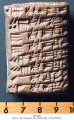
MS 1686

THE UR-ISIN KING LIST

  1. LIST OF THE 5 KINGS OF THE UR III DYNASTY WITH REGNAL YEARS FROM KING UR-NAMMU 2112 BC TO KING IBBI-SIN 2004 BC
  2. LIST OF THE 15 KINGS OF THE ISIN I DYNASTY WITH REGNAL YEARS FROM KING ISHBI-ERRA 2017 BC TO THE 4TH YEAR OF KING DAMIQ-ILISHU 1813 BC
ms1686

MS in Old Babylonian with a few names in Sumerian on clay, Isin, Babylonia, 1813 or 1812 BC, 1 tablet, 5,6x3,9x2,0 cm, 21 lines in Old Babylonian cuneiform script.

Binding: Barking, Essex, 1993, red quarter morocco gilt folding case by Aquarius.

Context: An incomplete tablet with the same texts was Erlenmeyer Collection no. 115, now in a public institution. The texts were originally extracted from date lists, now lost.

Commentary: 17 different Babylonian and Assyrian King Lists have survived, mostly in fragmentary or worn condition. The present King List is the only one perfectly preserved and is the oldest as well. All others are in public collections. In addition there are 23 surviving Sumerian King Lists, all in public collections except MS 2855. The importance of the King Lists for the chronology of the Babylonian and Assyrian Kingdoms can hardly be over-estimated. They are crucial tools and primary historical evidence for the historians.

Published: E. Sollberger: "New Lists of the Kings of Ur and Isin", in: Journal of Cuneiform Studies 8(1954) pp. 135-6; and A.H. Grayson, King List 2 in the article "Königlisten und Chroniken" in Reallexicon der Assyriologie und vorderasiatische Archaeologie, Berlin 1980, p. 90.

The Story of Time, ed.: Kristen Lippincott, with Umberto Eco, E.H. Gombrich. London, Merrell Holberton in association with National Maritime Museum, 1999, p. 255.

Jöran Friberg: A remarkable Collection of Babylonian Mathematical Texts. Springer 2007. Sources and Studies in the History of Mathematics and Physical Sciences. Manuscripts in the Schøyen Collection, vol. 6, Cuneiform Texts I. pp. 233-236.

Exhibited: 1. Conference of European National Librarians, Oslo. Sept. 1994; 2. "The Story of Time", Queen's House at the National Maritime Museum and The Royal Observatory, Greenwich, Dec. 1999 - Sept. 2000.


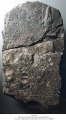
MS 1876/1

HAMMURABI, MIGHTY KING, KING OF BABYLON, KING OF THE FOUR QUARTERS OF THE WORLD, THE BUILDER OF THE TEMPLE EZI-KALAM-MA ("HOUSE - THE LIFE OF THE LAND"), TEMPLE OF THE GODDESS INNANA IN ZABALA

ms1876

MS in Old Babylonian on clay, Zabala, Babylonia, 1792-1750 BC, 1 brick, 13x29x9 cm, originally ca. 33x29x9 cm, 9 columns, (7x16 cm) in cuneiform script.

Context: There are 10 bricks extant apart from MS 1876/1-2, 9 in the Iraq Museum and 1, former MS 1876/3, now in British Museum (gift from The Schøyen Collection). MS 3028 is a royal inscription on black stone from the shoulder of a statue.

Commentary: Hammurabi (1792-1750 BC), the great king who created the Old Babylonian empire, is today mostly remembered for his famous law code. But he also built a series of great temples like the present one in Zabala. Towards the end of his reign, Hammurabi ordered his law code to be carved on stelae which were placed in the temples bearing witness that the king had performed his important function of "king of justice" satisfactorily. The famous stele now in the Louvre, was originally erected in the Sippar temple. The 12 surviving bricks are the only witnesses of the Zabala temple, its law code stele is lost.

For The Hammurabi law code, see MS 4507.
The Iraq bricks are published in: The Royal Inscriptions of Mesopotamia, early periods, vol. 4: Douglas Frayne, Old Babylonian Period (2003-1595 BC), p. 352.


MS 1955/1

INTERNATIONAL JUDGEMENT MADE BEFORE INITESHSHUB, KING OF CARCHEMISH AND SHAUSHGAMUWA KING OF AMURRU WHICH WAS SENT TO AMISTAMRU II, KING OF UGARIT CONCERNInG PIDDU, THE FORMER QUEEN OF UGARIT, SISTER OF SHAUSHGAMUWA, AND FORMER WIFE OF AMISTAMRU. PIDDU IS EXILED BUT PROTECTED FROM BEING PUT TO DEATH IN THAT AMISTAMRU CANNOT BRING HER BACK TO UGARIT FOR ANY REASON, AND SHAUSHGAMUWA IS FORBIDDEN TO ASSOCIATE WITH HER OR MAKE PLANS THAT WILL HAVE ANY IMPLICATIONS ON THE ROYAL LINE AT UGARIT

ms1955

MS in Akkadian on clay, Carchemish, Syria, 1250-1240 BC, 1 tablet, 8,2x10,2x3,2 cm, single column, 15+5 lines in cuneiform script, with seal impression rolled across the whole of the tablet, showing the deity Sharruma advancing left, holding a double axe and a sceptre.
Context: The present tablet is one out of 11 tablets concerning the divorce and judgement of Queen Piddu, involving 3 of the Kingdoms of the time, as well as the Hittite empire under King Tudkhaliash IV (ca. 1265-1220 BC).

Commentary: The kingdoms of Ugarit, Amurru and Carchemish at the North-east corner of the Mediterranean, were squeezed between the 3 great powers of the 13th c. BC, the Hittite empire, Assyria and Egypt. The present tablet illustrates the tensions among the kingdoms that fills in a bit of the picture of the upheaval to come at the end of the Bronze Age and the beginning of the Iron Age, leading to the fall of the Hittite empire to Assyria and the following Trojan war as described by Homer.
Published in Analecta Orientalia, 48, Roma, Pontificium Institutum Biblicum, 1971: Loren R. Fisher, editor, The Claremont Ras Shamra Tablets, pp. 11-21. The seal is published in Ugaritica III, p. 24.

Exhibited: 1. The Claremont Ras Shamra Tablets, at the Institute for Antiquity and Christianity, Claremont, California, 1970-1994. 2. "Preservation for access: Originals and copies". On the occasion of the 1st International Memory of the World Conference, organized by the Norwegian Commission for UNESCO and the National Library of Norway, at the Astrup Fearnley Museum of Modern Art, Oslo, 3 June - 14 July 1996.


MS 2063

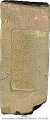
THE TOWER OF BABEL STELE

ETEMENANKI: ZIKKURAT BABIBLI: "THE HOUSE, THE FOUNDATION OF HEAVEN AND EARTH, ZIGGURAT IN BABYLON". CAPTION IDENTIFYING THE GREAT ZIGGURAT OF BABYLON, THE TOWER OF BABEL. THE ROYAL INSCRIPTION OF NEBUCHADNEZZAR CONTINUES: ETEMENANKI, I MADE IT THE WONDER OF THE PEOPLE OF THE WORLD, I RAISED ITS TOP TO THE HEAVEN, MADE DOORS FOR THE GATES, AND I COVERED IT WITH BITUMEN AND BRICKS

ms2603

MS in Neo Babylonian on black stone, Babylon, 604-562 BC, stele with rounded top, 47x25x11 cm, the back of the lower 2/3 missing, 3 columns, 3+24+24+24 lines in cuneiform script, to the left: carving of the Tower of Babel from a front view, clearly showing the relative proportions of the 7 steps including the temple on the top; to the right: the standing figure of Nebuchadnezzar II with his royal conical hat, holding a staff in his left hand and a scroll with the rebuilding plans of the Tower (or a foundation nail) in his outstretched right hand; at the top: a line drawing of the ground plan of the temple on the top, showing both the outer walls and the inner arrangement of rooms, including the one that once had a fine large coach in it, richly covered, and a gold table beside it, according to Herodot: The Histories I:181; on the left edge: another line drawing of the ground plan of the temple, further building plans on the missing back.

ms2063b

Context: The missing part of the stele's back, was in a religious institution in U.S.A., the present whereabouts unknown. The stele was found in a special hiding chamber, broken into 3 parts in antiquity, at Robert Koldewey's excavations of the site of the Tower of Babel in 1917. Its importance was immediately recognised. A photograph was taken with 3 archaeologists standing next to the stele. With the imminent danger of war breaking out in the area, they decided to rescue it, and each archaeologist carried one part out of the war zone. One part was taken to Germany, one part to Jordan and then London, the third part to U.S.A.
Now the 2 most important parts are reunited in The Schøyen collection.
For bricks from the Tower of Babel, stamped with Nebuchadnezzar's name, used during the rebuilding, see MS 1815/1-3. For the only other known architect's plan of a known temple, see MS 3031.

Commentary:
The ziggurat in Babylon was originally built around the time of Hammurabi 1792-1750 BC. The restoration and enlargement began under Nabopolassar, and was finished after 43 years of work under Nebuchadnezzar II, 604-562 BC. It has been calculated that at least 17 million bricks had to be made and fired. Babylon with the ziggurat was captured by Kyros 538 BC (who pulled down the 3 stair ramps so the tower could not be used as a fortress), Dareios I 519 BC, Xerxes ca. 483 BC, and entirely taken down by Alexander I the Great 331 BC, due to the structural water damage caused by the removed ramps, but his rebuilding plans failed.
Until now our knowledge of the Tower of Babel has been based on the account in Genesis 11:1-9, and of Herodot: The Histories I:178 - 182, with the measurement of the first 2 steps, and a Seleucid tablet of 229 BC (Louvre AO 6555), giving the sizes of the steps. However, no contemporary illustrations have been known, resulting in a long series of fanciful paintings throughout the art history until present. Here we have for the first time an illustration contemporary with Nebuchadnezzar II's restoring and enlargement of the Tower of Babel, and with a caption making the identity absolutely sure. We also have the building plans, as well as a short account of the reconstruction process. The text also mentions the restoration of the E-ir-inimanki ziggurat in Borsippa, once believed by some scholars to be the Tower of Babel.

Exhibited: Rounded top part only: 1. The Bibliophile Society of Norway's 75th anniversary. Bibliofilklubben 75 år. Jubileumsutstilling Bok og Samler, Universitetsbliblioteket 27.2 - 26.4.1997; 2. XVI Congress of the International Organization for the study of the Old Testament. Faculty of Law Library, University of Oslo, 29 July - 7 August 1998; 3. Tigris 25th anniversary exhibition. The Kon-Tiki Museum, Oslo, 30.1. - 15.9.2003 -

Published: To be published by Prof. Dr. Andrew George in the series, Manuscripts in The Schøyen Collection.


Top      Next collection